A Morning Visitor: The Maroon Firefinch and Weaver Bird
This morning, I was trying to identify a frequent feathered visitor to the tent outside my office door. After several sightings and a bit of digging, I finally got a name: the Maroon Firefinch! Tiny, fearless, and swift, it came right up to my feet as it pecked at fallen termites, drawn to the light above the entrance after a rainy night.
Not long after, a yellow and brown weaver bird joined the scene—just as curious, just as committed to its morning mission. And just like that, the start of my workday was made brighter. No drama. No big gestures. Just nature doing its quiet thing.
The Power of Little Things in Customer Care
It reminded me of something important in customer care: the beauty—and power—of little things.
A warm smile at the front desk. A handwritten note. The way we remember a returning client’s name, or how we respond when a child spills juice in the waiting area. These aren’t headline moments, but they create atmosphere. They linger.
A Job Seeker’s Experience: When First Impressions Fail
I once had a friend who was job-hunting. Someone referred him to a person working in this office. Eager and hopeful, he came in—only to be completely ignored by the receptionist. No eye contact. No “hello.” Just silence.
He sat there awkwardly, wondering if he was in the right place.
After a while, the person he had come to see came out and warmly greeted him. Noticing the tension, they asked the receptionist to kindly serve him a cup of tea. She did—but with such coldness that she nearly poured the tea on him. Not a single smile.
That experience stayed with him. It crushed something inside. He never pursued another job in an office again.
All it would’ve taken was a smile. A welcome. A simple, “Let me find the person you’re here to see.”
The Bright Side: Customers Who Light Up Your Day
But on the flip side, there are also those customers who arrive with so much warmth and charm, they change your whole mood. You know the kind—their conversation is so light and delightful that by the time they leave, your day feels lifted. They remind us that kindness is a two-way street. Just as we can make someone’s day, a customer can make ours.
Remember: Small Gestures Are Everything
So when I see birds like the Firefinch or the Weaver carrying out their tiny but purposeful morning routines, I’m reminded: in customer care, the smallest gestures carry great weight.
A smile. A greeting. An effort to acknowledge. These are not extras—they’re essentials.
Let’s not underestimate the little things. Because sometimes, they shape someone’s whole direction. Or make someone’s whole day.
Here’s to a week of noticing—and being—the beauty in the details.
It’s Monday, and I’m still laughing about something that happened over the weekend. If you’ve worked front desk or customer care long enough, you know how children shape the service experience—sometimes in hilarious, surprising, and even heartwarming ways.
Over the weekend, I was serving a lovely client who came in with her two boys—one around eight, the other closer to four. As we chatted, I suddenly felt my chair drop. The younger one had discovered that magical lever under my office chair and pulled it. Down I went, slow and steady like an elevator. We all burst into laughter.
In that moment, I wasn’t sure whether to stay professional or just laugh with them. But the joy was contagious, and laughter won. That little incident reminded me: children, even when they’re not the official clients, play a big role in the service experience.
🧒 How Children Shape the Service Experience in Real Time
Many businesses focus their service on adults. However, in clinics, shops, churches—even government offices—children are never just background noise. Whether they’re tugging at sleeves, pressing buttons, or wandering curiously, they actively shape the environment.
More importantly, they shape how parents feel during service.
From my cashier experience in Nairobi, I remember one mum who always chose our stall at the market. Her reason? Her daughter loved the small sticker we gave with every purchase. That sticker didn’t cost much—but it meant everything to that child. And to her mother, it showed that we noticed them both.
🎯 Family-Friendly Service Is Good for Business
Today, smart businesses go out of their way to create welcoming spaces for kids. A play area in a clinic, floaters in a hotel pool, or fun packaging for children’s meals—these are not just nice extras. They are strategies. They show customers, “We thought of your child too.”
💖 Parents Remember Details
When a child feels safe and happy, parents relax. They are more patient, more likely to stay longer, and more likely to return. A simple gesture—like a coloring book at the waiting area—can build brand loyalty that lasts for years.
At the church front desk, I noticed something similar. Parents would say, “My child loves Sunday school,” and that one comment would keep entire families coming back. It wasn’t just the sermon or choir—it was the care shown to the little ones.
🧠 Tiny Customers, Huge Lessons
Children don’t just shape the service experience for parents. They teach us, the workers, important lessons too.
💬 They Teach Us to Be Present
Children live in the now. When they’re happy, they giggle. When they’re upset, everyone knows. Serving them reminds us to be attentive, to listen closely, and to react with heart—not just procedure.
🌟 They Break the Ice
Some of my most tense moments with customers have been softened by a curious child. Once, a mother came in stressed over a missing document. Her son peeked over the desk and asked me if I had sweets. That tiny moment brought us all into the present—and turned stress into smiles.
💼 Kids Are Part of Your Brand
Families remember how your service made them feel. Kids play a key role in that memory.
According to the Harvard Business Review article “The Value of Customer Experience, Quantified”, customers who have the best past experiences spend significantly more and remain loyal for longer. That loyalty often begins with small moments—like how well their children were treated.
🖍️ Simple Touches, Lasting Memories
Even with a small budget, you can add little extras that make kids feel welcome:
These details matter. Even handling unstable customers can be easier when a child is nearby. You naturally soften your tone, become more aware, and serve with more patience and presence.
🧰 How Front Desk Teams Can Create Kid-Friendly Experiences
You don’t need a huge budget to make children feel seen and welcome. Sometimes, it’s the small things that make the biggest difference.
✨ Start with a Mini Welcome Zone
Place a small basket with coloring books or a few quiet toys near your desk. If you’re short on space, even a printed sheet and a box of crayons can make a child feel at home.
✨ Expect the Unexpected
Be ready for the occasional question: “Where’s the toilet?” “Do you have juice?” or “Why is your name tag shiny?” When they pull your chair lever or tap your keyboard, smile. These tiny humans are exploring life—and your workplace is part of their world for a moment.
🨂 Real Service Means Real Moments
One day, a child covered my desk logbook with smiley face stickers. Did it delay my work? Yes. Did it brighten my shift? Absolutely.
Children bring color into a world that can sometimes feel like black-and-white policy. They remind us that at the heart of service is connection, kindness, and the occasional comic relief.
💬 Share Your Story With Me!
Have you ever had a child totally change your day at work? Or taught you a life lesson from the other side of the counter?
👉 I’d love to hear your story! Drop it in the comments or send me a message on Facebook or directly via LinkedIn…” Let’s swap tales and celebrate the little ones who make our jobs a little brighter.
👉 Want more behind-the-desk stories? Explore these other reflections:
When I was a teenager, my mother would often leave me in charge of her shop. If she said I should be there by 2:00 PM, she meant ten minutes earlier—not on the dot.
If I showed up even five minutes late, she’d be five minutes mad—the “Why are you not here already?” kind of mad.
For her, respecting customers’ time wasn’t just good business—it was a way of life. She never kept customers waiting, and she expected the same from me.
That’s when I first learned: 👉 Time is more than a number. It’s a statement of respect.
How It Feels When You Don’t Respect Customers’ Time
Have you ever walked into an office or shop and felt invisible?
Staff are around—chatting, typing, moving—but no one even acknowledges you. Even if they’re busy, the silence says:
“You don’t matter right now.”
But with one sentence, the whole experience changes:
“Hi, I’ll be with you in five minutes.”
Suddenly, you’re not ignored. You’re expected.
This is what respecting customers’ time looks like—communicating, acknowledging, and prioritizing their presence.
Respecting Customers’ Time in Real-Life Situations
In a Restaurant
You sit. You wait. No one checks on you. You wonder if anyone’s working. But a simple greeting like “We’ll be right with you” keeps the waiting bearable—and respectful.
In an Office Queue
You line up. You explain your issue. Only to be told you should’ve gone elsewhere first. No one informed you. Now you start over.
It’s not just a waste of time—it’s frustrating and disrespectful.
I once queued at a public hospital, saw the doctor after a long wait, only to hear, “You were supposed to pass by vitals first.” I didn’t even know where that room was.
That could’ve been avoided with one sign or sentence.
Simple Tips for Respecting Customers’ Time
Here are practical, respectful ways to manage customer time better:
✅ Plan Ahead
Anticipate busy hours and staff accordingly. Don’t let customers suffer due to poor planning.
✅ Be Ready on Time
If you open at 8:00 AM, systems should be up and running by 7:55—not still booting at 8:15.
✅ Place a Knowledgeable Person at the Enquiry Desk
Customers should get clear direction from the first person they meet.
✅ Use Signage
Clear posters, checklists, or arrows save customers from unnecessary back-and-forth.
✅ Set Expectations
“Kindly visit Room 2 with your ID before returning here.” That one line prevents wasted time.
✅ Prevent Common Mistakes
If many people forget a document or step, display a reminder or have someone check at the door.
✅ Always Acknowledge Presence
Even a warm “I see you, I’ll be with you shortly” means a lot. Don’t let customers feel invisible.
Final Thought: Time Is a Form of Respect
From shops to hospitals, how you handle a customer’s time says everything about how you see them.
Respecting customers’ time is respecting their dignity.
When we value people’s time, we show them they matter. And that is the soul of excellent customer care.
Bonus Resource: Build Habits That Respect Time
If you’re committed to respecting customers’ time, the journey begins with how you manage your own.
One highly recommended read is Atomic Habits by James Clear—a powerful guide to building small, consistent actions that lead to big results. It’s especially useful for anyone in customer service or business who wants to become more reliable, responsive, and time-conscious.
Customer care burnout is not just tiredness at the end of a long shift—it is a deep emotional, physical, and mental exhaustion that creeps in slowly and lingers far beyond working hours. Anyone who has ever worked a 12-hour job, seven days a week, while juggling motherhood and hustles knows this truth: burnout is real, and if ignored, it can lead to serious health breakdowns.
I’ve lived it. Fresh in the morning, fading by noon. By the time the queue stretches beyond 15 people, fatigue seeps into your shoulders, your eyes glaze over, and your voice begins to sound distant—even to yourself. That’s the daily rhythm of customer care burnout.
But what many don’t realize is that burnout isn’t one-size-fits-all. Researchers and workplace wellness experts categorize it into different types of burnout, each rooted in unique underlying causes. Understanding which type you’re facing is the first step in learning how to cope with customer care burnout and reclaiming your balance.
Types of Burnout
1. Overload Burnout (Frenetic Burnout)
This is the most common in customer care roles. It comes from constant demands, long queues, heavy workloads, and inhuman schedules. You sacrifice personal well-being just to keep up. You ignore breaks, skip meals, and sometimes even push through sickness because the pressure feels unrelenting.
👉 This is what I felt working 12-hour shifts, 7 days a week, while trying to be present as a mother and still running side hustles. It’s unsustainable, and over time, your body will force you to stop—through illness, collapse, or complete emotional detachment.
This type comes from the opposite extreme—not enough stimulation. Imagine working in a role where you’re repeating the same instructions a hundred times a day, with no room for growth, no recognition, and no challenges. You may not be overworked physically, but you feel stuck, bored, and underappreciated.
In customer care, this often looks like robotic service—processing tickets or stamping papers endlessly without any engagement. The danger is that boredom morphs into cynicism, and you stop caring about the people behind the desk.
This form grows when you feel helpless, unsupported, and incompetent, even when you are doing your best. It happens when no matter how much effort you put in, you cannot keep up with the demands—and your employer offers little to no support.
You end up emotionally withdrawing, giving minimal effort, or feeling numb toward customers. In customer care, neglect burnout is especially dangerous because you still have to smile, listen, and empathize—even when you feel completely drained.
Sometimes, the issue isn’t workload—it’s values. If your goals, ethics, or sense of purpose don’t align with the company’s culture, every day feels like you’re betraying yourself just by clocking in.
For example, maybe you value empathy, but the organization pushes for speed over quality. Or you believe in fairness, but the system favors certain clients over others. That dissonance eats at you until you feel constantly conflicted.
👉 If you’ve ever worked for an employer who seemed inhuman, disregarding staff well-being, you’ve likely tasted misalignment burnout.
At 8 a.m., my desk was neat, my smile genuine, my energy sharp.
By noon, I was serving on autopilot, repeating the same questions without truly registering faces.
By evening, my shoulders ached, my feet swelled, and my chest tightened from leaning too long on the desk.
And yet—every customer had a story. An elderly man struggling with the system. A mother with a wailing baby. A frustrated client who walked in angry long before I said “Karibu.” Somehow, even in my exhaustion, I was expected to meet each storm with calm.
That constant push and pull—between empathy and fatigue—is the very heart of customer care burnout.
How to Cope With Customer Care Burnout
1. Acknowledge and Identify Your Type
Knowing whether you’re in overload, under-challenged, neglect, or misalignment burnout helps you choose the right coping strategies.
2. Build Micro-Breaks Into Your Day
Even when the queue won’t stop, sneak 60-second resets:
Stick to first come, first served for fairness—but trust your instincts. If someone is visibly unwell or a baby is crying, compassion should refine the rule.
If you are in an inhuman workplace that refuses to change, the most sustainable solution is eventually leaving. That doesn’t mean quitting tomorrow, but it does mean:
At the end of the day, the tasks you completed won’t matter as much as the grace you held onto. The patience you gave when you had none left. The laughter that broke through the tension.
But remember this: behind every number in the queue is a human being—and behind that desk, so are you.
So when the weight of customer care burnout threatens to crush you, pause. Breathe. Remind yourself that survival is not selfish—it’s necessary.
💬 Have you ever experienced burnout in customer care or another demanding job? How do you cope when things don’t let up? Share your thoughts in the comments—this space is for all of us behind the desk.
There was a time in my life when Monday mornings meant one thing: a trip to the bank with the Sunday offering from church. Sounds routine—but in reality, it was a full-blown expedition.
I’d arrive early, but never early enough. A crowd was always already there outside the banking hall, waiting for the 8:30 a.m. opening. It was even worse around school opening dates. Most banks hadn’t introduced customer chairs yet, so standing was the default. You could feel the collective impatience building. The staff often took their time settling in, and the queues moved slower than a Monday mood.
Just When It’s Almost My Turn…
Like clockwork, just as I was about to be served, the queue would stall. A customer with a complex, never-ending issue would hold up the line. Then, as if on cue, the Securicor team would show up with their heavy-duty sacks of cash. Of course, they had priority. That meant my whole morning could vanish while the deposit remained untouched in my handbag.
Queues and Compassion Don’t Always Go Together
I often thought of pregnant women or the elderly in those queues. The standing wasn’t the hardest part—it was the lack of empathy from fellow customers. I remember during one election season when I was expectant, and we were given priority to vote. The murmurs from behind us still ring in my ears.
“That’s for your leisure—don’t inconvenience us. Having babies is fun.”
Those words stuck. The discomfort of standing for hours was one thing, but the coldness in people’s voices was something else. It was uncomfortable, yes—but also oddly amusing. The way people could turn something as natural and noble as motherhood into a punchline just to protect their place in a queue made me shake my head and chuckle, even as my back ached and my feet swelled.
The Baby-Swapping Tactic
At the same voting centre, mothers with babies were being allowed to vote first. It didn’t take long before people started passing babies between one another just to cut the queue. Eventually, election officials started marking the babies’ thumbs too—because even infants weren’t safe from our cleverness. Only in Kenya!
When Queues Turn Deadly
Then there’s a memory that still sends chills down my spine. Years ago, there was a big Christmas concert at one of Nairobi’s most popular venues. Young people from all corners came to attend. The queues were long, excitement high, and security overstretched. Just before midnight, fireworks lit the sky—and panic broke out. The crowd surged forward in chaos. A stampede. Three lives were lost that night.
All because we never really learned how to wait well.
Final Thoughts: More Than Just a Line
Long queues are not just a test of patience—they’re a test of systems, empathy, and how we manage people under pressure. Whether it’s a bank, a polling station, or a concert gate, the line we stand in is never just a line. It tells a quiet story about who we are when we think no one is watching.
That’s all from the queue today—catch you in the next reflection! Don’t forget your patience.
Serving in Church Behind the Scenes: What Most People Don’t See
They say Sunday is a day of rest. For many, it’s a time for brunch, relaxation, or catching up on sleep. But for those of us serving in church behind the scenes, Sunday is anything but restful. It’s a day packed with preparation, dedication, and quiet acts of service that often go unnoticed—but never unappreciated.
The Early Morning Hustle: More Than Just a Service
My Sunday begins long before the sun rises. At 4 a.m., when most are still deep in sleep, my alarm goes off. I gently nudge my son awake, and together we begin our routine. There’s no café or breakfast joint open this early, so we heat leftovers from the night before.
I carry tea in this insulated travel mug — it keeps my tea warm even four hours into my shift while I move from one station to the next.
By 5 a.m., we’re on the road. My mind races through a checklist: prep the kitchen, get the tea boiling, and organize the media desk. As the sweet aroma of Kenyan tea fills the church hall, I whisper, “God, help me serve with a full heart.”
Why Volunteering in Church Behind the Scenes Matters
Serving in church behind the scenes means wearing many hats. At 6:30 a.m., I’m at the media desk preparing for the first service — reviewing liturgy, uploading sermon slides, checking microphones.
Want smoother presentations? I recommend this wireless slide clicker — it’s helped me keep focus during transitions.
Then come the 8:30 and 10:30 a.m. services — each with its rhythm, energy, and unexpected needs.
Behind-the-Scenes Church Duties: Offerings and Hospitality
Between services, I manage the offertory. I unlock the boxes, count the money, record every shilling. It’s a sacred responsibility. For that, I use a simple cash organizer that keeps notes and coins neat.
Next, I serve tea with the hospitality team. Even when I’m tired, a warm smile and cup go a long way in making someone feel welcome. These little unseen moments — pouring tea, arranging chairs, wiping spills — they are ministry too.
Faith Beyond Applause: A Life of Quiet Commitment
By the end of the last service, I’ve been on my feet for over six hours. I haven’t sat. I haven’t eaten. Yet my heart is full.
Serving in church behind the scenes isn’t about applause or a platform. It’s about giving your all — quietly, faithfully — because God sees what others don’t.
For me, Sunday isn’t a rest day — it’s a calling. The reward isn’t praise or position. It’s knowing I contributed to something greater than myself.
To stay organized, I carry this simple church volunteer notebook — it holds everything from announcements to prayer requests.
So next time you attend a Sunday service, spare a thought for the quiet servers — the ones serving in church behind the scenes. They’re the heartbeat of the ministry.
🙋🏾♀️ How Do You Serve in Your Church?
Are you also serving in church behind the scenes — or planning to start? I’d love to hear your story.
👉 Leave a comment below or share this post with a fellow volunteer. 👉 Looking for tools to make your service easier? Browse the products I personally use to stay energized and ready every Sunday.
Welcome! This blog, Lobby Reflections, is full of real stories from my life behind church, clinic, and office desks. 👉 Explore more reflections at lobbyreflections.co.ke and subscribe for new updates.
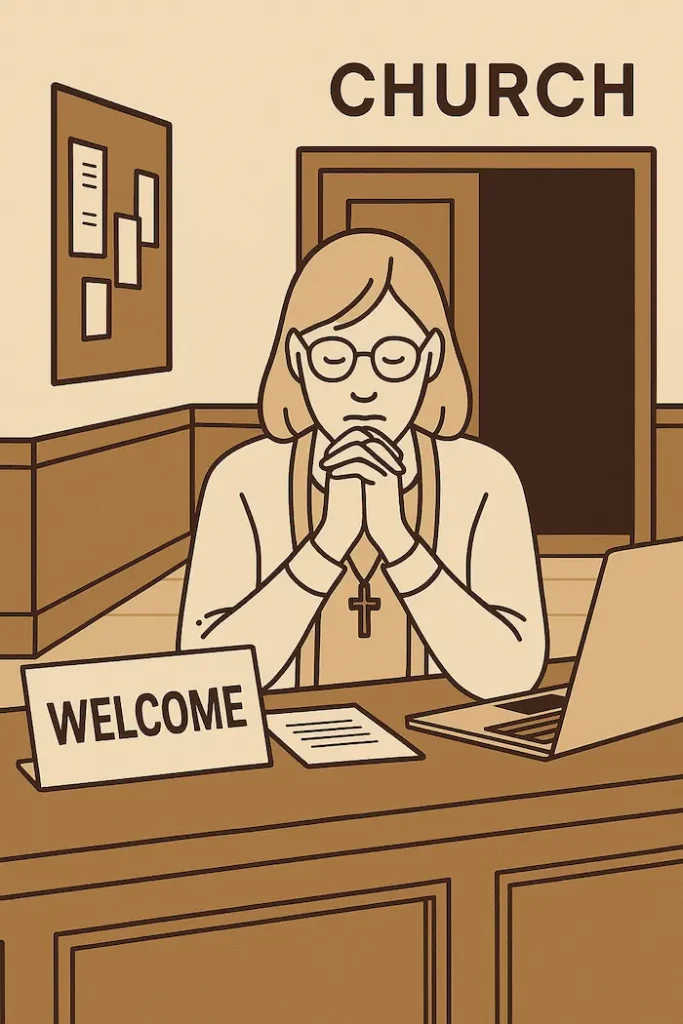
Serving as a church secretary was one of the most emotionally intense customer care roles I’ve ever handled. Many people think church front desk work is all about handing out bulletins or answering calls, but my church front desk stories revealed something deeper—a sacred frontline where faith, caution, and compassion had to coexist.
Real Church Front Desk Stories in Ministry
People didn’t just walk into the church looking for service times. They came with burdens—some visible, others carefully hidden behind practiced smiles. These encounters became part of my most powerful church front desk stories.
Much like what I shared in my customer care experiences across Kenya, the front desk in church was also a listening post. You had to discern not just what people said, but what they didn’t say.
When Church Front Desk Stories Meet Hesitation
Church Front Desk Stories That Touched—and Tested—Our Faith
Every week brought new faces. Some came in for prayer, others for food, and some for fare to upcountry. And in ministry, it’s not always easy to tell who’s in real need and who’s just mastered the script.
One man came to church, attending every service that Sunday—from dawn to dusk. By evening, someone helped him with food and fare. He returned the next day, singing beautifully and offering to help with services. Eventually, he was hosted by a kind pianist.
Then one day, he vanished—along with the pianist’s laptop and cash.
A week later, we learned he had repeated the same act in another church.
This was a hard lesson in setting boundaries without losing our hearts. (If you’re in ministry or customer-facing roles, you may find a portable, secure backpack like this one on Amazon useful—especially when you’re carrying electronics.)
Discernment in Church Front Desk Stories
The Boy Who Disappeared in Our Church Front Desk Encounter
After a youth concert one evening, a hotel manager approached us with a ten-year-old boy claiming to have traveled from Uganda to find his father in Kenya. His story felt too perfectly tragic.
Still, it was late. We gave him a warm meal and called the duty pastor. Plans were made to escort him to the police for shelter. But before we could leave, he disappeared.
We never saw him again.
To this day, I wonder if he was alone—or if someone was using him to test how soft-hearted church workers could be.
Compassion With Boundaries in Church Front Desk Stories
These church front desk stories shaped my understanding of real ministry. It wasn’t just about giving; it was about giving wisely.
You have to balance your emotions and gut instincts. Just like when working as a cashier in Nairobi, there’s always the need to stay alert and grounded—even when your heart is moved.
Ministry isn’t always pulpit or praise—it’s presence. Silent, attentive, ready. And the front desk becomes that sacred waiting place.
Need a simple notebook for journaling your ministry encounters or prayers? This leather journal makes a great companion for reflection.
What Church Front Desk Stories Taught Me
Here are key lessons I took with me from my time at the desk:
1. Every Face Tells a Story
Don’t rush people. Whether they’re asking for directions or breaking down in tears, listen fully. Sometimes, that’s all they came for.
2. Say “No” With Kindness
Not everyone can be helped financially. But a firm no, delivered with respect, is still love in action.
3. Be Wise as a Serpent, Gentle as a Dove
This biblical balance (Matthew 10:16) applies daily. It’s not un-Christian to vet stories or involve security. Safety matters—yours and the church’s.
Tools That Support Church Front Desk Ministry
In a high-traffic church front office, staying organized is vital. Here are some items that helped me stay efficient and present:
– Great for holding prayer request slips, pens, and tithe envelopes.
– Hydration during long shifts is a must.
– Because some days at the desk feel longer than they are.
Outbound Inspiration: Wisdom for Church Front Desk Stories
Frontline ministry challenges aren’t unique. Many resources speak directly to the need for compassion, discernment, and healthy boundaries:
Healthy Boundaries in Ministry: A Biblical and Practical Guide by Standing Stone Ministry explores how setting limits is rooted in Scripture and essential to sustainable ministry (standingstoneministry.org).
Compassion Fatigue: The Toll of Caring Too Much reminds ministry workers that empathy without careful self-care can lead to emotional exhaustion—and offers practical strategies for self-protection (verywellmind.com).
From real frontline voices, a Reddit discussion reflects the tension many feel: “You weren’t meant to shoulder the whole world and all their needs… The trick is where to draw the line.”
What Would You Do?
Have you ever worked in a church, NGO, or outreach space where compassion met caution? Have you struggled to tell if a request was sincere?
These church front desk stories taught me that even when you don’t have money or answers, people remember how you treated them.
Feel free to share your own stories in the comments—or message me privately. Let’s build a community that sees people fully, even when we can’t fix everything.
Final Reflection: Front Desk as Ministry
I now believe that a church front desk is not just a workstation—it’s a ministry station. It’s where theology meets humanity, where the broken find courage to show up, and where ministry workers must keep their hearts open but their eyes sharp.
Every story, no matter how short or suspicious, deserves a moment of dignity. Because behind each face is a soul. And in ministry, that’s sacred.
One sunny December afternoon, I found myself standing in for a colleague at an insurance firm. She was away on maternity leave, and I had temporarily stepped into her customer service role. My job? Helping clients navigate the complex world of insurance—policies full of fine print that read like riddles only lawyers could decode.
What made this job fascinating was how often people were caught off guard by what they were entitled to. This was especially true when it came to insurance payout surprises—payouts built into their policies that they didn’t even know about.
A Routine Visit Turns Into an Insurance Payout Surprise
That December afternoon, a familiar face walked through the door. He was a cheerful gentleman I’d assisted a few times before. We were handling a routine matter, and while confirming some policy details, I scrolled through his file—just being thorough, nothing fancy.
And then I saw it.
“By the way,” I asked casually, “did you receive your annual payout?”
He looked puzzled. “Payout? What payout?”
I pointed at the screen. “Your policy—look here. They sent you Kshs.80,000 just a few days ago.”
A Forgotten Benefit and a Weekend of Fun
That’s when realization hit him. His eyes widened—and then he burst out laughing.
“OH BOY!” he exclaimed. “That was my money? That 80K? Oh man, I drank it all in one weekend!”
“You did?” I asked, stunned.
He grinned, scratching his head. “If I’d known it came from my insurance, I might’ve thought twice.”
It turns out he’d seen the money arrive in his M-Pesa account but didn’t question it. December had that magical vibe. He assumed it was a blessing from above—or perhaps a forgotten client payment. “You know how it is,” he said. “Too many texts, too little time.”
That insurance payout surprise? Gone—poured away into a weekend of unplanned fun.
The Real Cost of Ignoring Your Insurance Benefits
We both laughed about it, but I couldn’t shake the thought: how many Kenyans are sitting on benefits they don’t know exist?
Insurance policies, especially life and endowment policies, sometimes have maturity benefits, bonuses, and annual payouts. These are meant to reward long-term commitment. But if clients don’t read or understand their policies, those benefits might come as total surprises—or worse, get wasted unknowingly.
If this gentleman—an otherwise savvy client—could overlook his own Kshs.80,000 insurance payout, how many others might be doing the same?
According to the Insurance Regulatory Authority of Kenya, a significant number of policyholders let policies lapse or underutilize them because they simply don’t understand them. [source]
What Is an Insurance Payout Surprise?
An insurance payout surprise happens when a client receives money from their insurance plan without realizing it was due. This could be:
A maturity bonus
A policy anniversary payout
A cashback feature
Accumulated dividends on a whole life plan
Accidental claims or riders activated by events
These features are often buried in policy documents and not explained clearly at the point of sale.
Know Your Policy, Claim Your Benefits
Here’s what you can do to avoid wasting your own insurance payout surprise:
1. Review Your Policy Annually
Don’t rely on memory or assumptions. Go through your plan each year. If possible, sit down with a financial advisor or your insurer’s customer care team.
2. Ask Questions Early
Ask your agent what benefits to expect and when. Have them break it down in simple language. Don’t be shy—it’s your money.
3. Track Payout Dates
Mark expected payout dates on your calendar. Whether it’s a school fees benefit, retirement top-up, or health cash plan, you deserve to know when the money’s coming.
Smart Spending Starts with Smart Awareness
Imagine if the client had known he’d be getting Kshs.80,000 from his insurance plan. He might’ve used it to:
Buy groceries in bulk before the New Year price hikes
Knowing your source of funds gives you the power to plan. And nothing beats intentional financial decisions—especially during festive spending seasons.
My Personal Reflection on Customer Service in Insurance
This moment wasn’t just about laughter over a drunk weekend—it was a powerful customer service lesson. In the post I wrote about handling unstable customers, I noted how every interaction is a chance to inform and empower.
This was another one of those moments.
Customer care isn’t about forms and queues; it’s about helping people see the value they’ve already built over time. It’s about turning invisible benefits into visible wins.
Tools to Help You Manage Insurance and Finance
If you’re managing multiple policies, apps and tools can simplify your life:
Final Thoughts: Don’t Let Your Insurance Payout Surprise Pass You By
An insurance payout surprise doesn’t have to be a mystery or a missed opportunity. With just a little awareness, you can turn those benefits into meaningful wins.
The next time a lump sum lands in your account—especially around the holidays—pause. Before you celebrate, check your policy. It might not be manna from heaven—it could be a reward from the discipline and planning you did years ago.
And isn’t that a better reason to toast?
Call to Action: Review, Reclaim, Rejoice
💡 Have you ever received an insurance payout surprise and didn’t realize it? Take a few minutes today to:
Log in to your insurance provider’s portal or call them.
Ask about any pending payouts or future benefits.
Mark the expected dates on your planner or digital calendar.
✅ Already got a payout? Tell us what you did with it in the comments section or message me on LinkedIn or Facebook. Let’s learn and laugh together.
Why My KRA Customer Service Experience Surprised Me
My KRA customer service experience began with fear, confusion, and a backlog of unfiled returns stretching over 16 years. Like many young Kenyans, I registered for a KRA PIN fresh out of college. We were told it was essential for job applications—and that filing returns, even nil ones, was a civic duty.
But in that first year, I didn’t file. I had no job, no income, and honestly, taxes were the last thing on my mind. The deadline came and went. Then another. And another. I moved on with life, unaware of the consequences quietly stacking up behind me.
Until one day—my inbox told a different story.
Shock and Panic: A Harsh Wake-Up Call
Over a decade later, I received several emails from the Kenya Revenue Authority. I opened one hesitantly. My eyes widened as I read line after line of penalties and missed returns. Apparently, I had defaulted for over 16 years, and the system had recorded fines totaling Kshs 48,000.
At the time, I was unemployed.
Panic kicked in. I imagined arrests, blocked opportunities, and a lifetime labeled as “non-compliant.” It felt like the walls were closing in.
But desperation pushed me to act. I emailed KRA and braced for silence—or worse, a cold response.
A Gentle Start to My KRA Customer Service Experience
To my surprise, someone responded kindly.
The agent calmly explained the waiver application process. But even with their guidance, the thought of stepping into a KRA office scared me. The stories I’d heard—long queues, rude staff, humiliation—played on a loop in my mind.
Still, I needed a solution. And life has a funny way of nudging us when we’re ready.
A KRA Customer Service Experience Sparked by a Stranger
Sometimes, Help Comes From Unexpected Places
While working as a security guard at a government health insurance parastatal, I met a university intern. We were casually discussing taxes when I confessed my tax situation. Without judgment, she told me KRA had introduced waivers for penalties and encouraged me to apply.
At first, I was hesitant. Shame can be paralyzing. But her confidence and clarity stuck with me. Eventually, I decided to take the leap and visit the local KRA office.
Facing My Fears: The KRA Customer Service Experience Begins
A Humbling Moment at the Gate
At the KRA office, two security guards gave me that “look” we all dread—one that sizes you up before you even speak. It stung. I do the same job. And yet, in that moment, I felt judged.
That reminder stayed with me: every person, regardless of job or appearance, deserves respect.
Inside, I signed the visitors’ book and was guided upstairs. Two officers were assisting clients. I waited, heart pounding, rehearsing what I’d say.
My True KRA Customer Service Experience: Fast, Kind, and Human
No Attitude. Just Help.
When my turn came, I nervously explained my case—16 years of arrears, panic, and uncertainty. The officer listened without flinching. He asked for my ID and email, and calmly started working on my account.
No raised eyebrows. No judgment. Just focus and professionalism.
In under 15 minutes, he had explained how to log in, guided me through the waiver process, and helped me understand what to do next.
I was stunned—in the best way.
This was the KRA customer service experience I never expected: human, courteous, and efficient.
Rethinking Government Services Through My KRA Customer Service Experience
Lessons I Carried With Me
That one experience changed how I saw KRA. I no longer imagined them as distant, unapproachable tax collectors. I saw real people—trained to serve, not just enforce.
As someone who works in customer-facing roles, I could relate deeply.
Clients often walk in expecting stress, red tape, or bribes. But when we serve with honesty, speed, and dignity, we surprise them. We build trust. We change stories.
What I Learned From My KRA Customer Service Experience
A Reputation Is Built One Interaction at a Time
Organizations aren’t defined by slogans or billboards—they’re shaped by daily human interactions.
A helpful tax officer. A respectful receptionist. A warm greeting from a security guard. These little things create big impressions.
And if KRA—one of the most feared institutions in Kenya—can change lives through service, so can any other organization.
Affiliate Picks to Help You With Tax Filing
If you’re trying to get started or stay compliant, these tools helped me navigate the process:
Have you ever interacted with KRA or another government office in Kenya? What was it like?
Were you pleasantly surprised like I was, or left frustrated?
Drop your story in the comments. Your experience could encourage someone else who’s feeling anxious or ashamed.
And if this story helped you—share it with someone who’s been putting off their tax issues. It might save them thousands of shillings—and give them peace of mind.
There is a common saying that the customer is always right. While the phrase reminds businesses to value their customers, anyone who has worked on the frontline knows that not every customer is polite, patient, or respectful. Learning how to handle aggressive customers in customer service is one of the most important skills a frontline professional can develop because it helps maintain professionalism, protects workplace relationships, and, in some situations, safeguards personal safety.
Whether you work in a hospital, government office, bank, SACCO, hotel, supermarket, school, or reception desk, you will eventually meet customers who are frustrated, impatient, demanding, or openly hostile. Some simply want to be heard, while others believe aggression is the fastest way to receive attention or bypass established procedures.
Over the years, working in customer-facing roles has taught me that handling aggressive customers is not about winning arguments or proving who is right. It is about staying calm under pressure, communicating clearly, setting healthy boundaries, and knowing when to seek help before a difficult situation becomes dangerous.
In this article, I share practical lessons drawn from my own frontline experiences, including real encounters that changed the way I view customer service. If you regularly interact with customers, I hope these lessons help you respond with confidence while protecting both your professionalism and your well-being.
Frontline Reflection:Professionalism is not tested when customers are polite. It is tested when emotions are high and you choose to remain calm.
Why Learning How to Handle Aggressive Customers in Customer Service Matters
Aggressive customers exist in every industry.
They walk into hospitals worried about loved ones.
They visit government offices anxious about important documents.
They enter banks concerned about finances.
They arrive at hotels after long, exhausting journeys.
Every customer brings a different story, and sometimes those stories are accompanied by frustration, fear, or impatience.
That is why learning how to handle aggressive customers in customer service is no longer just a useful workplace skill—it is an essential professional competency.
Repeated exposure to aggressive behaviour can affect your confidence, increase workplace stress, and eventually lead to burnout if you don’t have healthy ways of managing these situations.
At the same time, your response influences how other customers perceive your organization. A calm and professional approach reassures everyone around you that fairness and respect still matter, even during difficult interactions.
Through my own customer care experiences in Kenya, I have learned that every challenging interaction offers an opportunity to grow as a professional and as a person.
→ Internal Link:Customer Care Experiences in Kenya
Respect, however, should never be a one-way expectation. While businesses should strive to provide excellent service, customers also have a responsibility to treat frontline staff with courtesy and patience. I explore this further in my article on customer etiquette at the front desk, where I discuss the small behaviours that make customer interactions smoother for everyone.
How to Handle Aggressive Customers in Customer Service Starts Before Conflict Begins
One of the biggest lessons I have learned throughout my career is that conflict rarely begins the moment a customer raises their voice.
It starts much earlier.
Experienced customer service professionals don’t simply react to difficult situations—they prepare for them.
Before every shift, I remind myself that not every customer will arrive smiling.
Some people will be:
Worried about a sick family member.
Frustrated by long queues.
Stressed about money.
Upset by delays.
Carrying the weight of challenges that have nothing to do with me.
Others may genuinely believe that becoming louder or more demanding will help them receive faster service.
Anticipating these situations doesn’t make me pessimistic.
It makes me prepared.
Instead of taking difficult behaviour personally, I remind myself that part of my role is managing interactions professionally, even when emotions are running high.
This simple mental preparation has helped me remain calm during situations that could easily have escalated into unnecessary conflict.
One question I often ask myself before beginning work is:
“If someone becomes angry today, how will I respond?”
Thinking through possible scenarios before they happen helps me respond thoughtfully instead of reacting emotionally.
In many cases, successful conflict management begins long before the customer reaches your desk.
Frontline Reflection:The best way to handle an aggressive customer is to prepare yourself before the first customer walks through the door.
Preparing Yourself Mentally for Difficult Customer Interactions
Every profession comes with predictable challenges.
Teachers prepare for disruptive classrooms.
Healthcare workers prepare for emergencies.
Security officers prepare for unexpected incidents.
Customer service professionals should also prepare for difficult conversations.
Before your shift begins, ask yourself:
How will I respond if someone interrupts another customer?
What if someone refuses to follow the process?
When should I involve my supervisor?
At what point does an aggressive customer become a safety concern?
How will I protect my own emotional well-being?
Thinking through these questions builds confidence and helps you make better decisions under pressure.
Preparation does not eliminate conflict.
It simply equips you to handle it with professionalism and composure.
Research also shows that anticipating stressful situations and responding calmly can improve workplace outcomes and reduce unnecessary conflict. (Later in the article we’ll look at guidance on workplace safety from OSHA and the International Labour Organization.)
→ Outbound Links (later in article):
OSHA Workplace Violence Prevention
International Labour Organization guidance on workplace stress and violence
A Real Front Desk Experience That Changed My Perspective
One Friday afternoon at around 2:15 p.m., I was assisting a customer when a man walked past my reception desk without saying a word.
Instead of checking in, he headed straight into the back offices as though he knew exactly where he was going.
My colleague looked at me and quietly asked,
“Where is he going? There isn’t anyone back there.”
Without leaving the customer I was already serving, I calmly replied,
“Let him go. He’ll be back.”
A few moments later, he returned looking frustrated.
Without greeting anyone, he interrupted the conversation I was having and demanded,
“Isn’t there someone back there?”
I calmly asked,
“Did you find anyone?”
He ignored my question.
Instead, he expected me to stop serving the customer who had arrived first and attend to him immediately.
I didn’t.
I politely continued helping the first customer.
After standing there for a short while, he realised that interrupting the process wasn’t going to change it.
Without another word, he sat down and waited for his turn.
That encounter reinforced something I have never forgotten:
Not every aggressive customer needs an argument.
Sometimes the most professional response is simply to remain calm, follow fair procedures, and refuse to be drawn into unnecessary conflict.
Looking back, I realise that my calm response didn’t just help me.
It reassured the other customers waiting to be served that everyone would be treated fairly, regardless of who spoke the loudest.
Many of the principles I apply today have been shaped by years of working at the front desk, and I share more of those experiences in my article on front desk customer service lessons.
Emotional Intelligence: The Skill Behind Handling Aggressive Customers
One of the biggest lessons I have learned over the years is that how to handle aggressive customers in customer service has very little to do with having the perfect answer.
Instead, it has everything to do with managing emotions—both yours and the customer’s.
A customer may forget the exact words you used, but they will almost always remember how you made them feel during a difficult moment.
This is where emotional intelligence becomes one of the most valuable skills a customer service professional can develop.
Emotional intelligence is the ability to recognize your own emotions, understand the emotions of others, and respond thoughtfully instead of reacting impulsively.
In customer service, that means staying calm when someone raises their voice, listening without becoming defensive, and choosing words that reduce tension rather than fuel it.
The more experience I gain, the more I realise that professionalism is not about suppressing emotions—it is about managing them wisely.
Frontline Reflection:Your greatest strength is not speaking louder than an angry customer. It is remaining calm when they expect you to lose your composure.
How to Handle Aggressive Customers in Customer Service with Emotional Intelligence
When customers become aggressive, our natural instinct is often to defend ourselves.
That reaction is understandable.
After all, no one enjoys being shouted at, insulted, or blamed for something beyond their control.
However, reacting emotionally rarely improves the situation.
Instead, emotional intelligence encourages us to pause before responding.
Ask yourself:
What is this customer really upset about?
Are they frustrated with me, or with the situation?
What response is most likely to calm the conversation?
Sometimes the problem isn’t the service.
It is fear.
Confusion.
Stress.
Or disappointment.
Recognising this helps you respond with empathy while still maintaining professional boundaries.
Empathy does not mean agreeing with unreasonable behaviour.
It means acknowledging another person’s emotions while guiding the conversation back toward a solution.
Practical Ways to Handle Aggressive Customers in Customer Service
Every situation is different, but there are practical habits that consistently help reduce conflict and keep conversations productive.
Listen to Understand Before You Respond
Many aggressive customers simply want someone to hear them.
Allow them to explain their concern without interrupting, provided the situation remains safe.
Active listening communicates respect and often reveals the real issue hiding behind the emotion.
Sometimes customers begin a conversation sounding angry, only for you to discover that they are actually confused or anxious.
Listening carefully helps you respond to the problem instead of reacting to the emotion.
Acknowledge Feelings Without Accepting Abuse
Simple statements such as:
“I understand why you’re frustrated.”
“I can see this situation has been upsetting.”
“Let’s work together to find a solution.”
can immediately lower emotional tension.
Notice that none of these statements admit fault.
Instead, they acknowledge the customer’s feelings while keeping the focus on resolving the issue.
At the same time, remember that empathy should never require you to accept insults, threats, or abusive behaviour.
Respect should always remain mutual.
Set Clear and Respectful Boundaries
Being professional does not mean allowing customers to ignore procedures or intimidate staff.
Healthy boundaries protect both employees and customers.
For example, if someone interrupts while you’re assisting another customer, you might calmly say:
“I’ll be happy to assist you as soon as I finish helping this customer.”
If someone begins shouting, you could respond:
“I want to help you, but I need us to speak respectfully so we can understand each other.”
Simple statements like these communicate confidence without escalating the conflict.
One lesson I explored in my article on front desk customer service lessons is that consistency and fairness often calm a situation more effectively than confrontation.
One mistake organizations sometimes make is rewarding customers who shout the loudest.
When someone skips a queue, interrupts another customer, or demands immediate attention—and staff give in—it sends the wrong message.
Other customers notice.
Fairness begins to disappear.
Trust is weakened.
Professional customer service means applying the same standards to everyone, regardless of who speaks the loudest.
That doesn’t mean ignoring urgent situations.
It means making decisions based on genuine need rather than pressure.
A Lesson I Learned the Hard Way
Not every aggressive customer limits their behaviour to raised voices or demanding language.
Some situations become much more serious.
Several years ago, I was working at a medical facility where one of my responsibilities was ensuring that every patient checked in at reception before seeing the doctor.
One day, a woman walked straight past reception and headed towards the consultation room.
I politely explained that she needed to register first.
Instead of returning to reception, she became angry.
Before I had time to react, she slapped me across the face.
For a few moments, I stood there completely shocked.
The doctor came out and tried to calm the situation.
Later, I learned that the woman was his landlord.
That discovery complicated everything.
It reminded me that workplace dynamics, personal relationships, and positions of influence can sometimes affect how incidents are handled.
Although the experience was painful, it taught me lessons that remain with me today.
Professionalism does not guarantee that every customer will behave professionally.
And no customer service professional should ever accept physical violence as “part of the job.”
A Stubborn Customer Can Become a Dangerous Customer
One lesson experience has taught me is that aggressive behaviour often develops gradually.
Very few people become physically aggressive without first displaying warning signs.
Someone who repeatedly interrupts staff today may become verbally abusive tomorrow.
Someone who refuses simple instructions may later become intimidating.
That is why I always encourage customer service professionals to remain alert.
Watch for behaviours such as:
Repeated interruptions.
Refusing reasonable instructions.
Invading your personal space.
Speaking in a threatening tone.
Pointing fingers aggressively.
Insulting staff members.
Attempting to provoke an argument.
Recognising these signs early gives you an opportunity to de-escalate the situation before it becomes dangerous.
Many of these observations come from my own customer care experiences in Kenya, where I have seen how quickly seemingly minor incidents can escalate if handled poorly.
The goal is not to assume the worst about every customer.
The goal is to remain observant, prepared, and professional.
Because sometimes the safest decision is not continuing the conversation.
It is knowing when to involve someone else.
How to Handle Aggressive Customers in Customer Service by Preventing Escalation
One of the biggest misconceptions about customer service is that every aggressive customer can be calmed down if you simply say the right words.
In reality, that isn’t always true.
Some customers arrive already frustrated.
Others are overwhelmed by circumstances beyond your control.
And a few may simply be determined to argue regardless of how professionally you respond.
That is why how to handle aggressive customers in customer service is not just about communication—it is also about recognizing risk, preventing escalation, and protecting yourself and those around you.
Your responsibility is not to control another person’s behaviour.
Your responsibility is to respond professionally while doing everything reasonably possible to prevent a difficult situation from becoming a dangerous one.
Frontline Reflection:Not every confrontation can be prevented, but many can be de-escalated when we recognize the warning signs early.
Recognize the Early Warning Signs Before They Escalate
Aggression rarely appears without warning.
Most confrontations begin with small behavioural changes that become more serious if ignored.
Watch for signs such as:
Raising their voice.
Interrupting repeatedly.
Refusing to listen.
Ignoring simple instructions.
Invading your personal space.
Clenching fists.
Pointing aggressively.
Making personal insults.
Threatening staff or other customers.
These behaviours should never be dismissed as “someone just having a bad day.”
Recognizing them early allows you to change your approach, alert a colleague, or involve a supervisor before the situation deteriorates.
Good customer service is not only about solving problems.
It is also about protecting people.
Anticipation Is One of the Best Conflict Management Skills
Earlier in this article, I mentioned that I begin each shift expecting that at least one interaction may be difficult.
That mindset has helped me more than I ever imagined.
When you anticipate that challenging situations are part of frontline work, you stop being surprised by them.
Instead of reacting emotionally, you respond professionally.
Ask yourself:
What if this customer refuses to listen?
What if they start shouting?
What if they threaten another customer?
What if they refuse to leave?
Thinking through these possibilities before they happen allows you to make calm decisions instead of emotional ones.
Preparation is not pessimism.
Preparation is professionalism.
Know When to Ask for Help
One of the biggest mistakes I made early in my career was believing I had to solve every problem by myself.
I now know that asking for help is one of the most professional decisions you can make.
If a customer:
Continues shouting despite your efforts.
Refuses every reasonable solution.
Begins threatening staff.
Becomes physically intimidating.
Makes you fear for your safety.
Do not continue handling the situation alone.
Call your supervisor.
Ask a colleague to assist.
Contact security if necessary.
Protecting yourself is part of doing your job well.
No customer interaction is worth risking your safety.
Document Serious Incidents
When a confrontation goes beyond normal customer frustration, documentation becomes essential.
Write down what happened as soon as possible while the details are still fresh.
Include:
Date and time.
Location.
What the customer said or did.
Your response.
Names of witnesses.
Action taken by management or security.
Avoid emotional language.
Record the facts accurately and objectively.
Good documentation protects you, helps your organization identify patterns, and creates accountability if further action becomes necessary.
Every Organization Has a Responsibility to Protect Frontline Staff
Customer service professionals represent their organizations every single day.
We welcome visitors.
Answer questions.
Manage queues.
Solve problems.
Handle complaints.
Offer reassurance.
Yet despite carrying these responsibilities, frontline staff are sometimes expected to tolerate behaviour that would never be accepted in other workplaces.
That should never be the standard.
Organizations should provide:
Clear reporting procedures.
Conflict management training.
Supportive supervisors.
Access to security where appropriate.
Emergency communication procedures.
A zero-tolerance approach to physical violence and abuse.
The Occupational Safety and Health Administration (OSHA) provides guidance on preventing workplace violence and emphasizes that employers have an important role in creating safer workplaces, especially for employees who regularly interact with the public.
Workplace violence is not simply a customer service issue.
It is a workplace health and safety issue.
Violence Can Happen Anywhere
Many people assume workplace violence only happens in high-risk occupations.
Unfortunately, that isn’t true.
Reception desks.
Hospitals.
Government offices.
Banks.
Retail stores.
Schools.
Hotels.
Any environment where people are stressed, emotional, or frustrated has the potential for conflict.
The International Labour Organization (ILO) also recognizes that workplace violence and harassment affect employees across many industries and encourages employers to develop policies that protect workers while promoting respectful workplaces.
These recommendations reinforce something many frontline employees already know from experience:
Feeling safe at work should never be considered a luxury.
It should be the standard.
You Matter Too
One topic that is rarely discussed in customer service is the emotional cost of always being expected to remain calm.
Behind every receptionist, cashier, security officer, customer care representative, or front desk officer is a human being.
We carry our own worries.
We have families.
Financial responsibilities.
Health concerns.
Personal struggles.
Yet every day we are expected to greet customers with patience and professionalism.
Some difficult interactions remain with us long after the workday ends.
We replay conversations.
Wonder whether we could have handled them differently.
Carry the emotional weight home.
Over time, that can lead to stress, burnout, anxiety, or compassion fatigue.
Taking care of yourself is not selfish.
It is part of becoming a better customer service professional.
Recover After Difficult Customer Encounters
After a stressful interaction, give yourself permission to recover.
Simple actions can make a significant difference.
You might:
Take several deep breaths.
Drink water.
Walk briefly during your break.
Speak with a trusted colleague.
Debrief with your supervisor.
Write down what happened.
Pray, reflect, or journal.
Personally, writing has become one of my healthiest ways of processing difficult experiences.
Many of the stories shared on Lobby Reflections began as challenging moments that later became valuable lessons.
If you’ve read my article on Front Desk Customer Service Lessons, you’ll know that some of the most difficult days have also become some of my greatest teachers.
Likewise, my article on Blending Technology and Human Care explores how good systems can support frontline staff, but never replace empathy, judgment, and human connection.
There is one message I hope every customer service professional remembers.
You do not have to carry every burden alone.
If repeated exposure to aggressive customers begins affecting your confidence, sleep, relationships, or mental well-being, talk to someone.
Speak with your supervisor.
Confide in a trusted colleague.
Seek professional support if necessary.
Looking after your mental health is not a sign of weakness.
It is one of the wisest investments you can make in your career.
Because the better you care for yourself, the better equipped you are to care for others.
Frontline Reflection:You cannot continually pour patience into others if you never take time to refill your own emotional cup.
Understanding Why Customers Become Aggressive
One of the greatest lessons customer service has taught me is that aggressive behaviour rarely appears without a reason.
That reason does not excuse abusive behaviour, but understanding it often helps us respond more effectively.
Some customers are worried about a loved one in hospital.
Others have spent hours travelling to reach your office.
Some are under financial pressure.
Others are anxious because they do not understand a process or fear they may lose an important opportunity.
When we recognize that anger is often driven by fear, stress, disappointment, or uncertainty, it becomes easier to respond with empathy rather than defensiveness.
Empathy is not the same as accepting abuse.
It means acknowledging another person’s emotions while maintaining professional boundaries.
One phrase I have found particularly helpful is:
“I understand this situation is frustrating, and I’ll do everything I can to help within our procedures.”
This shows empathy without making promises you cannot keep.
Don’t Take It Personally
This is one of the hardest lessons for anyone working on the frontline.
When someone shouts at you, ignores your instructions, or speaks disrespectfully, it is natural to feel personally attacked.
Over the years, however, I have realised something important.
Most of the time, the customer’s anger is not really about you.
You simply happen to be the person standing in front of them.
Instead of asking,
“Why is this customer treating me this way?”
I now ask,
“What might this person be going through today?”
That shift in perspective has helped me become more patient without accepting disrespect.
Professionalism is not about absorbing someone else’s anger.
It is about responding wisely while protecting your own dignity.
Continue Learning From Every Customer Interaction
Every difficult customer leaves behind a lesson.
Sometimes that lesson is patience.
Sometimes it is communication.
Sometimes it is learning to trust your instincts when a situation feels unsafe.
Throughout my career, every difficult encounter has shaped how I serve customers today.
Many of those lessons are shared throughout Lobby Reflections.
If you would like to continue learning from real frontline experiences, you may also enjoy reading about my Cashier Experience in Nairobi, where I share lessons from another demanding customer-facing role.
You can also explore the Customer Care category for more practical articles on communication, professionalism, customer experience, and workplace service.
Frequently Asked Questions About How to Handle Aggressive Customers in Customer Service
1. What is the first thing you should do when a customer becomes aggressive?
Stay calm.
Take a breath before responding and allow the customer to explain the issue if it is safe to do so.
Listening carefully often reduces tension and helps you identify the real problem before offering a solution.
2. What causes customers to become aggressive?
Aggressive behaviour can result from stress, fear, financial pressure, long waiting times, poor previous experiences, confusion, unrealistic expectations, or personal problems unrelated to your organization.
While these factors may explain the behaviour, they never justify abusive conduct.
3. How can emotional intelligence help when dealing with aggressive customers?
Emotional intelligence helps customer service professionals recognize their own emotions, understand the customer’s perspective, communicate calmly, and make thoughtful decisions under pressure.
Developing emotional intelligence improves conflict resolution and strengthens professional relationships.
For readers interested in learning more, the Harvard Business Review on Emotional Intelligence provides valuable insights into why emotional intelligence is one of today’s most important workplace skills.
4. Should customer service staff tolerate verbal abuse?
No.
Employees should always remain respectful, but they should never tolerate insults, threats, discrimination, harassment, or physical violence.
Setting healthy boundaries protects both employees and customers.
5. When should you involve a supervisor or security?
A supervisor or security should become involved whenever a customer becomes threatening, refuses repeated instructions, invades personal space, attempts physical violence, or creates a safety risk for staff or other customers.
Protecting people must always come before completing a transaction.
6. Can aggressive customer behaviour be prevented?
Not completely.
However, many situations can be prevented or reduced through clear communication, empathy, consistent procedures, emotional intelligence, and recognizing warning signs before emotions escalate.
Preparation significantly improves your ability to manage difficult situations professionally.
7. How do you recover after dealing with an aggressive customer?
Take time to recover.
Speak with a colleague or supervisor.
Document the incident if necessary.
Take a short walk.
Drink water.
Pray.
Journal.
Or simply allow yourself a few quiet moments before serving the next customer.
Looking after your emotional well-being is an important part of professional customer service.
8. Why is documentation important after a serious customer incident?
Documentation creates an accurate record of what happened.
It protects employees, supports investigations, identifies recurring problems, and helps organizations improve workplace safety.
9. Which industries experience aggressive customers most often?
Aggressive customer interactions can occur in almost every customer-facing industry, including healthcare, government services, banking, retail, hospitality, education, insurance, and telecommunications.
Any workplace that regularly serves the public should be prepared for challenging customer interactions.
10. Does handling aggressive customers become easier with experience?
Yes.
Experience builds confidence.
It improves emotional intelligence.
It helps you recognize warning signs earlier and respond more effectively.
While difficult situations never disappear completely, experienced customer service professionals often become better equipped to manage them calmly and professionally.
Key Takeaways
Before you leave, remember these important lessons:
✔ Aggressive customers are part of frontline customer service.
✔ Preparation is often more effective than reaction.
✔ Emotional intelligence is one of your greatest professional strengths.
✔ Set respectful boundaries without becoming confrontational.
✔ A stubborn customer can become a dangerous customer if warning signs are ignored.
✔ Know when to involve a supervisor or security.
✔ Document serious incidents accurately.
✔ Looking after your own mental health is part of being an effective customer service professional.
📷 Suggested Final Image
Place hmediately before “Final Thoughts.
Image: A confident customer service professional smiling while welcoming the n
Final Thoughts
When I first entered customer service, I believed my job was simply to answer questions and direct people to the right place.
Experience has taught me otherwise.
Every day, customer service professionals stand at the intersection of people’s expectations, frustrations, fears, and hopes.
Some days bring smiles and appreciation.
Others bring impatience, conflict, and difficult conversations.
Ironically, it is those difficult moments that have shaped me the most.
They have taught me patience.
Humility.
Self-control.
Discernment.
The importance of healthy boundaries.
And above all, they have taught me that professionalism is not measured by how we serve polite customers.
It is measured by how we respond when serving difficult ones.
Throughout my career, I have been interrupted while helping other customers.
I have been shouted at.
I have been treated unfairly.
I have even experienced physical aggression for simply following workplace procedures.
Those experiences were painful, but they strengthened my conviction that customer service professionals deserve respect, protection, and support.
No one should have to choose between earning a living and feeling safe at work.
If there is one message I hope you take away from this article, it is this:
You cannot control every customer.
But you can prepare yourself.
You can strengthen your communication skills.
You can develop emotional intelligence.
You can recognize warning signs before situations escalate.
You can ask for help when necessary.
And you can continue serving others without losing your professionalism—or yourself.
Frontline Reflection:Your greatest strength in customer service is not enduring abuse in silence. It is remaining professional while protecting your dignity, your well-being, and your safety.
I’d Love to Hear From You
Have you ever dealt with an aggressive customer?
What happened, and what lesson did the experience teach you?
Share your experience in the comments below. Your story could encourage another frontline professional facing a similar challenge.
If you enjoyed this article, I also invite you to explore more practical customer service insights in the Customer Care section of Lobby Reflections, where I share real experiences and lessons from the frontline.