Blog

  • Affordable Office Essentials Kenya – Top 10 Must-Haves

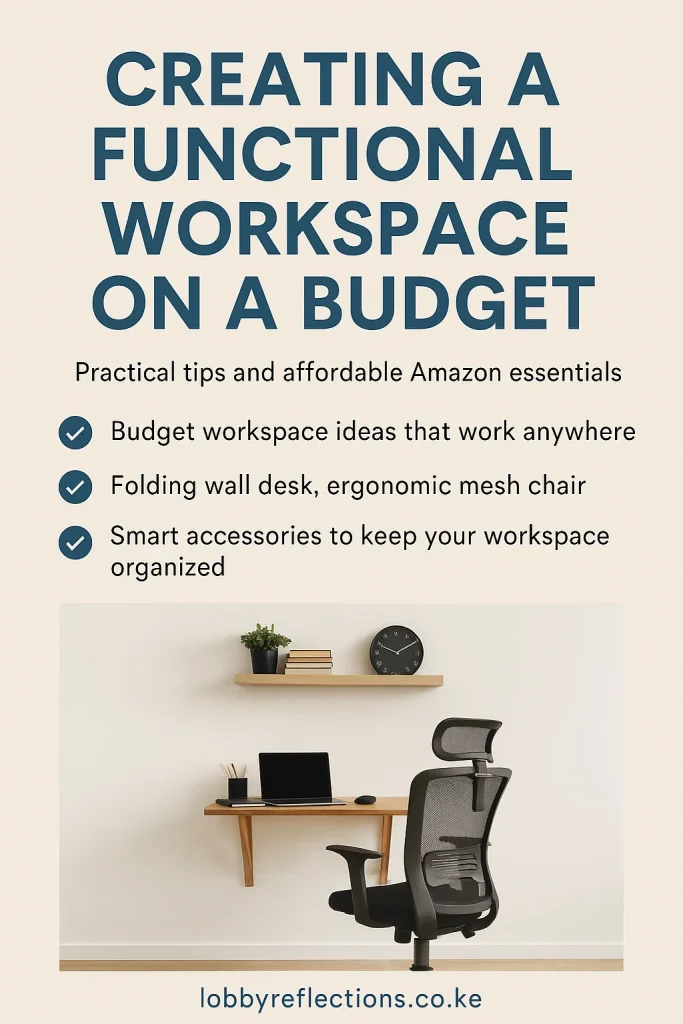
    A neatly arranged modern office desk featuring a laptop, wireless keyboard, ergonomic chair, water bottle, and desk organizer — showcasing affordable office essentials in Kenya.

    Whether you’re working from home in Nairobi, running a side hustle in Eldoret, or commuting daily to an office in Mombasa, one thing remains true: your work environment directly impacts your productivity. That’s why choosing the right tools and creating a functional workspace with affordable office essentials Kenya professionals actually use is more important than ever.

    The good news? You don’t need a massive budget to upgrade your workspace. With just a few affordable office essentials Kenya-based professionals can access, you can transform your setup and get more done.

    In this post, I’ll walk you through 10 budget-friendly tools available on Amazon that can help you stay organized, healthy, and productive. Whether you’re a freelancer, student, business owner, or full-time employee, these are items that actually make a difference.


    💺 Affordable Office Essentials Kenya: Ergonomic Office Chair

    Why it matters: Sitting for hours in an uncomfortable chair can lead to back pain and fatigue. An ergonomic chair supports your posture and increases focus.

    Recommended Features:

    • Adjustable height and back support
    • Breathable material
    • Compact for small home offices

    📅 Check affordable ergonomic chairs on Amazon


    📋 Affordable Office Essentials Kenya: Laptop Stand

    Why it matters: A laptop stand raises your screen to eye level, which helps prevent neck strain. It’s one of the simplest affordable office essentials Kenya workers can add to their desks.

    Bonus: Many are foldable and easy to carry.

    👉 Browse top-rated laptop stands here


    🖱️ 3. Wireless Keyboard & Mouse Combo

    Why it matters: Typing on a laptop keyboard all day is tiring. A wireless combo gives flexibility and reduces hand fatigue.

    Look for:

    • Quiet keys
    • Long battery life
    • Slim design for portability

    👉 Find budget wireless combos on Amazon


    🎧 4. Noise-Canceling Headphones

    Why it matters: Whether you’re in a noisy home or a shared workspace, noise-canceling headphones can boost focus and reduce distractions.

    👉 Explore affordable noise-canceling headphones


    📆 5. Desk Organizer

    Why it matters: A clean space boosts productivity. One of the top budget office essentials Kenya workers should invest in is a multi-compartment desk organizer.

    Options include:

    • Plastic or metal trays
    • Drawer-style organizers
    • Pen and cable holders

    👉 Shop desk organizers on Amazon


    🔌 6. Power Extension with Surge Protection

    Why it matters: Kenya often experiences power surges. A surge protector extension keeps your electronics safe.

    Top features to look for:

    • USB ports
    • Overload protection
    • Long cable length

    👉 See surge-protected power strips here

    According to Healthline, bad posture and poor seating can affect spinal health. Protecting devices is just as important as protecting your body.


    💧 7. Time-Marked Water Bottle

    Why it matters: Staying hydrated boosts focus and prevents fatigue. Time-marked bottles remind you to sip throughout the day.

    Choose one that is:

    • BPA-free
    • Easy to clean
    • Fits in cup holders

    👉 View time-marked bottles on Amazon


    📒 8. Daily Planner or Productivity Journal

    Why it matters: Writing down your tasks and goals helps you stay on track. Pen and paper still have unmatched clarity.

    Ideal planners include:

    • Daily, weekly, and monthly views
    • Gratitude or reflection pages
    • Goal-tracking sections

    👉 Explore planners and journals on Amazon


    💡 9. Ring Light for Virtual Meetings

    Why it matters: With remote work becoming the norm, looking presentable on video calls is important. A ring light improves lighting significantly.

    Use it for:

    • Zoom calls
    • TikTok videos
    • Online teaching or interviews

    👉 Check out USB-powered ring lights


    🩼 10. Footrest or Back Support Cushion

    Why it matters: Your seat might not be ergonomic, but a simple support cushion can make it much more comfortable.

    Look for:

    • Memory foam
    • Portable and washable designs

    👉 Shop back support cushions here


    🔹 Bonus: Organize Your Digital Space Too

    Don’t just focus on physical tools. Tools like Google Calendar, Notion, and Trello can help you manage digital clutter and tasks efficiently.

    “A cluttered desk, uncomfortable chair, or poor lighting can slowly drain your energy and focus. And as I’ve learned, trust and professionalism in business often begin with how you present your workspace. Here’s what I shared about the currency of trust in business.


    📋 Final Thoughts: Start Small and Build Your Ideal Space

    Even if you start with just one of these affordable office essentials Kenya professionals love, you’ll begin to notice real results. Better posture, clearer focus, and improved motivation.

    You can find all these items on Amazon with delivery options for Kenya. I use affiliate links to recommend tools that have helped me personally, and I may earn a small commission if you purchase through them—at no extra cost to you.

    Want to support this blog and improve your work life? 📌 Click here to see all my Amazon productivity picks


    💬 What Would You Add?

    Which tool has made the biggest difference in your work or study setup? Let me know in the comments or message me directly on Facebook.

  • When God Closes a Door: Hannah’s Story of Faith

    “Warm candlelight shining near a closed wooden door, symbolizing hope and faith in times of waiting.”

    When God closes a door, it can feel like rejection. But sometimes, that closed door is actually an invitation—to trust deeper and to rise stronger.

    Hannah’s story in 1 Samuel is one of the clearest biblical examples of this. Read the full story in 1 Samuel 1 here.

    📖 Need a deeper dive into stories like Hannah’s? This NIV Study Bible offers great insights and notes for your spiritual walk.. Labeled barren, mocked by her co-wife, and burdened with grief, she still chose to believe that her story wasn’t over. She poured out her heart before God—not with rehearsed words, but raw emotion.

    Want to start journaling your prayers like Hannah? This beautiful Christian prayer journal on Amazon helps you pour out your heart daily.

    What moves me most is that after she prayed, her face changed. Her burden lifted. She walked away lighter, even before her situation changed. That’s what happens when you hand over the pain to the One who sees the full picture.

    When God closes a door, it’s not the end. It’s the beginning of something deeper. Just like Hannah, you can trust that peace is possible before the promise is fulfilled.


    When God Closes a Door: Was Hannah the First or Second Wife?

    One might ask: Was Hannah the first wife or the second? Scripture suggests she was the first wife. Her co-wife, Peninnah, had many sons and daughters. And in a society where motherhood was seen as a woman’s greatest honor, Hannah bore the painful stigma of barrenness. The whispers, the shame, the comparisons—these were heavy burdens she carried. Yet, she received a double portion of Elkanah’s love, and the Bible says he loved her deeply.

    This reminds me that God is never unjust. When one door appears firmly shut, God often opens another that brings far more fulfillment. Hannah may have been barren, but she was beloved. And when the time was right, her womb was opened and her faith rewarded with a son—Samuel, a prophet who changed the destiny of Israel.

    Peninnah, though fruitful, is remembered more for her mockery than her motherhood. She used her strength not for encouragement, but to inflict pain. Unfortunately, human beings are often adept at wounding others, especially when they feel superior in one area.


    When God Closes a Door: Why Does He Do It?

    Before we dive into Hannah’s transformation, let’s pause and ask: Why does God close a door anyway?

    Sometimes it’s to protect us from something we’re not yet ready for. Other times, it’s to prepare us for something greater. God may close a door to strengthen our dependence on Him, to shift our priorities, or to lead us into a deeper relationship with Him. Closed doors can feel cruel, but often they’re acts of divine mercy.

    What truly moves me is what happened after Hannah prayed. The Bible records that after pouring out her soul to God at the altar, she got up and her burden lifted—even before her situation changed.

    “Then the woman went her way and ate, and her face was no longer sad.” — 1 Samuel 1:18 (ESV)

    She hadn’t conceived yet. She hadn’t seen a breakthrough. But peace entered her heart, and that made all the difference.

    Sometimes, when you’ve carried pain for too long, you reach a breaking point. You get tired of the sadness. Tired of the silence. And like Hannah, you pour out your heart to God—because there’s simply no other way.

    And then, like her, you rise lighter. Not because your reality has changed yet, but because your spirit has.


    📘 Looking for daily encouragement? Try this Women’s Devotional on God’s Promises to strengthen your faith as you wait.

    Reflections for Today

    • If you’re waiting on God, like Hannah, know that you are not forgotten.
    • If someone in your life seems “ahead” in one area, remember God sees the whole story—and He is just.
    • When people mock or belittle you, respond like Hannah: take your pain to prayer, not to war.
    • And above all, remember: prayer doesn’t just change things—it changes you.

    Final Thought
    Hannah’s story reminds us that when God closes a door, it is never without purpose. Sometimes, that closed door protects you. Other times, it prepares you. Either way, it leads you closer to the promise, if you walk through it with faith.

    Let Hannah’s story encourage you: Don’t stop praying. Don’t stop trusting. Because even in silence, God is working.

    🕯️ Hang a reminder of God’s timing with this 1 Samuel 1:27 Scripture Print — a perfect gift or encouragement piece for your home. in this story on faith in desperate times and God’s provision.

    This post contains Amazon affiliate links. If you click and buy, I may earn a small commission at no extra cost to you. Thank you for your support.

  • System Failure in Kenya’s Public Service: A Frontline View

    Every day behind the counter, I witness the slow and painful unraveling of what we once called public service. The system failure in Kenya is not theoretical—it is personal. It walks through our doors in the eyes of the elderly, the sick, the poor, and the desperate. It whispers through their sighs and settles in their silences.

    While many come in with hope, they often leave with heavier hearts—uncertain, unheard, and sometimes worse off than when they arrived.

    What Is System Failure—and How Does It Show Up?

    A system is a structure of people, processes, tools, and rules meant to make life easier and fairer.

    When one part breaks—such as communication, policy, or platform—the whole thing collapses. That’s when system failure happens.

    It shows up in many ways:

    • Patients are told “the system is down” and sent away
    • Mothers give up after their files are repeatedly lost
    • Frontline workers try to serve without the tools they need

    System Failure That Silences the Truth

    System failure isn’t always quiet.

    Recently, a young man—an only child and a father of one—was taken from his father’s home by police and later found dead. Why? For sharing content online that exposed government corruption.

    He didn’t steal. He didn’t harm anyone. He told the truth. The very system that was supposed to protect him became his enemy.

    This tragedy mirrors the story of Albert Ojwang, a teacher and blogger who died in police custody after criticizing police leadership. His case drew national protests and demands for justice.

    📎 Read more: Kenyan blogger’s wife seeks answers after his death in police custody (Reuters)

    System Failure in Everyday Service – The SHA Example

    One of the clearest examples of service breakdown is the new SHA annual payment system.

    Previously, people could pay health insurance premiums monthly. Now, the revised system demands a full year’s payment upfront. Although “Lipa Pole Pole” exists as an alternative, many Kenyans avoid it. For some, it feels like a trap into debt. For others, trust in repayment plans simply doesn’t exist.

    As a result, countless customers walk away in despair. I’ve heard them say, “Let me just die. I can’t afford this.” These are not just isolated complaints—they are signs of a public system that’s failing to meet its promise.

    Real Lives Devoured by System Failure

    System failure isn’t just about headlines. It’s the mother walking home without help. It’s the elderly woman crying at a desk. It’s the tired public servant trying to serve while navigating chaos.

    I wrote more about this emotional weight in a past post:
    📎 When You Can’t Meet Expectations: The Heavy Price of Disappointing Customers

    What Can Be Done to Stop System Failure?

    We can’t patch a sinking ship with silence.

    To stop system failure, we must:

    • Educate the public before implementing changes
    • Train and equip frontline staff
    • Open feedback and complaint channels
    • Protect whistleblowers and digital activists
    • Include real citizens in system design

    But more than plans and platforms, systems need goodwill.

    When the people designing systems truly care, they:

    • Listen to the ground truth
    • Show up when people are hurt
    • Acknowledge flaws and fix them
    • Lead with empathy, not control

    Goodwill is not a luxury in governance—it is the soul of public service. Without it, even the best systems fall.

    Final Thoughts: System Failure Is a Human Crisis

    To every customer who has walked away feeling invisible, to every family grieving a loved one taken by silence, and to every public servant doing their best inside a broken system—keep going.

    Let it be a voice reminding us that system failure is not just technical—it’s emotional, political, and deeply human.

    And the longer we normalize it, the more it grows.

  • Life-Changing Books for Women – 6 Must-Reads Before 40

    Life-Changing Books for Women – 6 Must-Reads Before 40

    Life doesn’t come with a manual, but the right book at the right moment can shift your mindset, heal your heart, and point you toward your purpose. Over the years, I’ve come across life-changing books for women that transformed how I view money, faith, growth, and self-worth.

    💬 My Turning Point

    I still remember when I read Rich Dad, Poor Dad. I was in my late twenties, struggling with debt and unsure how to move forward financially. That book opened my eyes to a whole new way of thinking about money. It wasn’t just about how much I earned — it was about what I did with it. That one read started me on a personal journey of financial literacy, growth, and mindset renewal.

    6 Life-Changing Books for Women to Read Before 40

    Whether you’re in your 20s or nearing 40, here are 6 life-changing books for women I recommend to every woman seeking clarity, confidence, and direction in her life.


    📚 1. Rich Dad, Poor Dad by Robert Kiyosaki

    A life-changing book for women who want to build financial literacy.

    A timeless classic that reshapes how we view money, assets, and financial freedom. Kiyosaki shares lessons from his “two dads” — one rich, one poor — and challenges us to break out of the paycheck-to-paycheck mindset.

    👉 Buy on Amazon


    🔁 2. Atomic Habits by James Clear

    This book taught me that small, consistent habits create big life shifts. It’s practical, easy to follow, and backed by science. A must-read if you’re working toward any personal or professional goal.

    👉 Buy on Amazon


    💸 3. You Are a Badass at Making Money by Jen Sincero

    One of the most life-changing books for women who struggle with their relationship with money. Jen writes like a supportive big sister, reminding you that it’s okay to want wealth — and you’re worthy of receiving it.

    👉 Buy on Amazon


    ✝️ 4. The Purpose Driven Life by Rick Warren

    A spiritually grounding read that takes you on a 40-day journey to discover why you’re here and how to live a meaningful life. Perfect for those feeling lost or longing for direction with a biblical foundation.

    👉 Buy on Amazon


    🌟 5. The Alchemist by Paulo Coelho

    A magical story about following your personal legend. This novel is full of wisdom about listening to your heart, trusting the journey, and not giving up — even when the path seems unclear.

    👉 Buy on Amazon


    🧘🏽‍♀️ 6. The Power of Now by Eckhart Tolle

    Sometimes the biggest breakthrough is learning to slow down. This book helped me understand the power of living in the present, letting go of overthinking, and embracing peace.

    👉 Buy on Amazon


    🧭 How I Choose Life-Changing Books for Women

    When choosing life-changing books for women, I often reflect on what I need in the moment — structure, healing, or spiritual renewal.

    • When I need motivation, I reach for mindset books like Atomic Habits.
    • When I feel uncertain or spiritually dry, The Purpose Driven Life centers me again.
    • When I want inspiration and creativity, a fictional tale like The Alchemist reignites my passion.

    I also love asking friends, following book bloggers, and checking Pinterest recommendations (like this one 😊). Trust your gut — the right book often finds you when you’re ready.


    📌 Pin and Share It

    Want to come back to this list later? Pin this blog post and share it with a friend who needs it.


    Final Thoughts

    Each of these titles came to me at a time I needed them most — and I believe they’ll do the same for you. Whether you’re trying to figure out your finances, strengthen your faith, or simply get unstuck, one of these books might be your turning point.

  • Handling Unstable Customers in Kenya With Empathy and Grace

    "Illustration of customer care worker handling unstable customers at front desk with calm background."

    One of the most unpredictable parts of working in customer care is handling unstable customers — especially when you’re unsure whether they’re simply distressed or potentially dangerous. Today, I had a chilling, confusing, yet eye-opening encounter that reminded me how much mental health impacts both those we serve and those of us behind the desk.

    She came in quietly, but I could tell something was off. Her appearance was disheveled. Her speech — jumbled, barely coherent. I froze. It’s a reaction I’ve had before around people I suspect may be mentally unstable. I wasn’t sure if I was safe.

    My body went on alert. Handling unstable customers was never part of my training. But here I was, face to face with a woman who clearly wasn’t okay — and all I could do was listen.


    When Mental Health Walks In

    Mental health is a delicate, often unspoken issue in many Kenyan workplaces. But it’s even more complex when it shows up unannounced at your desk.

    She kept talking. Her words — mostly disconnected thoughts and stories — spilled out rapidly. I didn’t catch much, and honestly, I didn’t know what to say. I was afraid. I tried keeping my distance, fearing she might hit or lash out, but she kept drawing closer.

    At some point, I gave up trying to “handle” her in the traditional sense. I realized I was being invited into a different kind of service moment — one not guided by procedure or customer etiquette, but by human presence. I simply stood there, and listened.

    📘 Related Read: If you’ve ever struggled with how to respond during emotional conversations, Emotional Intelligence by Daniel Goleman offers powerful insights on awareness, empathy, and response under pressure.

    It reminded me deeply of the power of listening in customer care — how listening, even without understanding, can offer healing to someone who feels invisible.


    Mental Health Awareness Belongs in Every Office

    Truthfully, I wasn’t ready for it. Handling unstable customers comes with emotional and psychological risks most people don’t see. We, the frontline workers, often absorb people’s chaos without anyone asking if we’re okay afterward.

    The woman continued to speak until, quite suddenly, she said, “Let me go before I’m found here.” And with that, she vanished as quickly as she had arrived.

    That one line — “before I’m found here” — haunted me. Who was she hiding from? Where had she come from? What kind of life is she returning to? These are the questions that linger after such encounters — questions that no training manual ever prepares you for.

    If you’re in customer care in Kenya, you’ve likely had your own moments like this. That’s why I feel so strongly about customer etiquette at the front desk. Because when customers approach us with basic dignity, it helps us serve even better — especially in intense situations.


    Lessons I Learned About Handling Unstable Customers

    This was more than just another workday. It was a test in fear, empathy, and restraint. Here are some key lessons I took away from this encounter on handling unstable customers:

    1. Be Cautious, But Not Cold

    It’s okay to be afraid. Safety comes first. But don’t let fear dehumanize the person in front of you.

    2. Listening Is Sometimes Enough

    You won’t always have the right response. That’s okay. Being present and silent can offer more peace than words.

    3. Your Mental Health Matters Too

    Encounters like this don’t end when the customer leaves. Take time to process, reflect, or talk to someone about what you experienced.

    🧠 Helpful Read: The Body Keeps the Score by Bessel van der Kolk explains how trauma and emotional strain affect our minds and bodies — even in everyday interactions.

    4. Mental Health Awareness Is Crucial

    We must normalize mental health conversations in our workplaces. Kenya has made steps in this area through the Kenya Mental Health Policy 2015–2030 which outline strategies for awareness, integration, and service improvement.

    Handling Unstable Customers Is About More Than Patience

    According to the World Health Organization, mental health support in workplaces is critical. It’s time we recognized that handling unstable customers is more than just part of the job — it’s an emotional experience that demands attention, support, and training.


    Final Thought

    Today, I didn’t assist someone with a form or service. I simply offered space to someone who needed to be seen. It wasn’t easy. It wasn’t clean. But I believe it mattered.

    So if you’re on the frontlines, know this: your ability to remain human in the face of unpredictability is your superpower.

    And if you’re ever in doubt, just listen. Sometimes, that’s all someone really needs.

  • “Pharaoh’s Hardened Heart: What It Teaches Us Today”

    Illustration of Pharaoh before Moses, symbolizing Pharaoh’s hardened heart in the biblical Exodus story"

    Today’s Sunday reflection takes us to the dramatic story of Pharaoh’s hardened heart, found in the book of Exodus. Moses is sent to Egypt with one message from God: “Let my people go.” Pharaoh refuses. Again and again, plagues fall, and each time, Pharaoh seems close to relenting — then his heart hardens again.

    We often wonder: Why would God harden someone’s heart? But if you read the full story, you’ll see that Pharaoh hardened his heart first (Exodus 8:15, 8:32), and only after repeated stubbornness did God confirm it and use the situation to reveal His glory.

    This story holds timeless truths about how we, too, can resist God’s voice without even realizing it.

    What Pharaoh’s Hardened Heart Teaches Us

    Pharaoh’s hardened heart wasn’t just a personal issue — it became a national crisis. His refusal to obey God brought suffering on his people. And it wasn’t because he didn’t hear God — it was because he ignored Him.

    In contrast, look at the Pharaoh in Joseph’s time (Genesis 41). When God spoke through Joseph’s dream interpretation, this Pharaoh listened. He promoted Joseph and saved Egypt and surrounding nations from famine. His soft heart saved lives.

    Two kings. Two choices. One obeyed and blessed others; the other resisted and destroyed his own people.

    Signs of a Hardened Heart Today

    We might not be kings or rulers, but we all face moments when God speaks — through His Word, through people, or through inner conviction — and we’re called to respond.

    Pharaoh’s hardened heart began with pride. That same pride can show up in us as:

    • Anger we don’t want to let go
    • Bitterness we nurse in secret
    • Unforgiveness we justify
    • Resistance to change because we’re comfortable

    Sometimes, we even celebrate these traits: “That’s just how I am,” or “I don’t let people cross me.” But while we think we’re protecting ourselves, we’re actually building walls between our hearts and God.

    As life goes on, the heart can grow dull. The things that once convicted us no longer move us. The voice of God becomes faint. Not because He’s silent — but because our hearts are no longer listening.

    The Israelites Wanted to Go Back

    It wasn’t just Pharaoh. Even the Israelites, after God freed them, began to rebel.

    When the wilderness tested them — when there was no meat, no variety, no certainty — they longed for Egypt, the very place they had begged God to deliver them from.
    “We remember the fish we ate in Egypt at no cost…” (Numbers 11:5)

    They forgot the slavery. They remembered only the food. Their hearts hardened in hardship, and they preferred the comfort of captivity over the uncertainty of freedom.

    That’s what a hardened heart does. It makes us forget God’s faithfulness and romanticize our past bondage. It leads us to grumble, resist, and rebel — even when we’re on the edge of breakthrough.

    Hebrews 3:15 warns us:
    “Today, if you hear His voice, do not harden your hearts as you did in the rebellion.”

    When You Sense Resistance in Your Heart

    If you’ve noticed that prayer feels dry, you’re avoiding difficult conversations, or you keep saying “later” when God says “now” — be careful. Those are signs of a slow-hardening heart.

    Pharaoh’s hardened heart didn’t happen in a day. It was the result of daily disobedience. But we can respond differently.

    God offers a better way:
    “I will remove from you your heart of stone and give you a heart of flesh.” (Ezekiel 36:26)

    His desire is not to condemn but to soften and restore. He wants hearts that are teachable, responsive, and full of trust.

    A Simple Prayer to Soften the Heart

    Here’s a prayer you can carry into the week:

    Lord, show me where my heart has grown hard.
    Soften me with Your presence.
    Make me responsive to Your Word, even when it’s uncomfortable.
    Help me choose humility over pride, and obedience over resistance. Amen.

    Related Reflection:

    ➡️ How to Handle Aggressive Customers in Customer Service
    Sometimes, God allows us to meet difficult people — not just to test our patience, but to soften the parts of us we didn’t know had hardened.


    Final Thought:
    Pharaoh’s hardened heart shows us the danger of ignoring God and the power of choosing to obey. Don’t wait for ten plagues to hear God clearly. Listen while it’s still easy to say yes.

    A soft heart isn’t weakness. It’s strength in God’s hands.

  • First Cleaning Client: A WhatsApp & Referral Win

    In January this year, I found myself in a situation many can relate to — I needed a side hustle. My salary wasn’t enough to meet my responsibilities, and with school fees and basic expenses pressing, I knew I had to start something. I settled on a cleaning business, but I had no idea how long it would take to land my first cleaning client — or how that moment would change everything.

    If you’re thinking of starting your own venture, here’s a great guide on how to start a cleaning business. You can also explore how to register a small business in Kenya through the official eCitizen portal.

    I chose to begin a cleaning and laundry service — simple, practical, and doable alongside my regular job. What followed was a journey that eventually brought me my first cleaning client, through a route I never expected: WhatsApp and a friendly plumber.


    The Struggle to Get Started

    I started with the basics: I designed a simple flyer, printed a few copies, and went around looking for places to pin them. I used regular office glue — a mistake in hindsight — and stuck one flyer on an electricity pole near a residential area. I passed by it almost daily, silently hoping someone would call. It stayed up for weeks, but no calls came in.

    That effort went unanswered. I felt stuck — like many people do when their small business idea doesn’t take off immediately.

    (Related Post: Sales Challenge)


    A Surprise Referral That Changed Everything

    Months passed. Then five months later, I tried again. This time, I turned to WhatsApp status. I created a digital flyer and added photos, and began posting it regularly.

    Still, no responses came in the first few days. But I kept going. Then in the second week, I checked who was viewing my statuses — and spotted a familiar name. A plumber who had come to fix the toilet and sink at our office earlier that year. We had talked briefly then, and something told me to reach out.

    “Hi, do you know anyone who might need cleaning or laundry services?”

    To my surprise, he replied positively and said he’d let me know. That was Friday.


    The Referral That Brought My First Cleaning Client

    On Monday morning, he called. “Someone wants their house cleaned,” he said. My heart skipped. After all this time, I finally had a real lead — my first cleaning client.

    Initially, I thought I’d send someone else. I had loosely agreed with a lady who could take on jobs for a two-thirds share. But the plumber said, “You should go yourself.” He was right. This was the perfect chance to see the space and meet the client directly.

    I borrowed time from work, visited the client at lunch, and discovered she was moving into a new house and needed a thorough cleaning — plus laundry.


    Lessons I Learned from My First Cleaning Client

    That first visit wasn’t just about assessing the job. It was about building trust. The client saw me in person, and that helped us connect. We agreed on the price and scheduled cleaning for the next day.

    Later, I shared the story with a friend who reminded me of important points to keep in mind:

    • Always prioritize your personal safety when working in private homes.
    • Respect the client’s property and space — even moving items should be done with permission.
    • Be clear about pricing and expectations to avoid misunderstandings.
    • Build referrals, not just transactions.

    These are the foundations of a trustworthy cleaning service.

    Why Your First Cleaning Client Is a Big Deal

    That first job changed my mindset. Here’s why your first cleaning client matters:

    • 🧽 It shows your business idea can work
    • 💬 You get direct customer feedback
    • 🤝 It’s the start of trust and referral building
    • 📈 It motivates you to keep going

    It wasn’t perfect. I was nervous. But I showed up. And that made all the difference.

    If you’re thinking of starting your own cleaning side hustle, I recommend checking out this helpful resource on how to build a cleaning business from scratch— it breaks down everything from pricing to marketing in easy steps.

    It wasn’t perfect. I was nervous. But I showed up. And that made all the difference.

    "first cleaning client WhatsApp referral cleaning business Kenya"

    Moving Forward After My First Cleaning Client

    That single referral taught me more than I could imagine. I now post regularly, take small risks, and talk about my services openly. Every client is a door to growth — and my first cleaning client was the key that unlocked it all.


    💬 Need cleaning or laundry help around Meru?
    DM me on WhatsApp — reliable, neat, and done with heart.

    #FirstCleaningClient #CleaningInKenya #SideHustleDiaries #LobbyReflections

  • My Blogging Journey: From Reader to Writer After 20 Years

    "My blogging journey workspace setup with inspirational books like Awaken the Giant Within, The Da Vinci Code, John Grisham novels, and Parents Magazine"

    For years, my blogging journey lived quietly inside my dreams. It began in high school, where books were my escape, entertainment, and education. I devoured everything—the school set book The River and the Source (which I reread countless times), thrilling novels by John Grisham, glamorous stories by Jackie Collins, and the emotionally intense works of Danielle Steel, although many were too heavy for my teenage heart.

    Our high school library was my second home. At home, my mum’s Parents Magazine was a monthly treat. My dad made sure every weekend came with a copy of The Saturday Nation—no newspaper, no weekend. I read Lifestyle, Young Nation, and even the politics pages. And oh—who remembers those small Reader’s Digest magazines? They were my favourite too—tiny packages of wisdom, humor, and short stories that could brighten an entire afternoon.

    That’s where my blogging journey began to take shape—inspired by storytelling, headlines, and the power of words.


    From Customer Care Desks to Content Creation

    Over the years, I found myself in the world of customer care—receptionist, secretary, front office assistant, even running my own small business. These experiences became part of my blogging journey, teaching me about people, patience, and purpose.

    I reflect on those lessons in my blog, like my time at a microfinance office where I learned the quiet strength in listening, or working as a cashier on Kenyatta Avenue where I discovered how customer care often extends beyond transactions.

    But my career path wasn’t without bumps. One of my most important lessons came during a period I shared in Handling Unstable Customers in Customer Care Kenya—learning to remain calm, even when a situation seemed impossible.


    When a Friend Rekindled the Dream

    Then, life changed. I lost my job. The routine ended. With bills to pay and uncertainty ahead, I had to ask: What now?

    I turned to the internet and began chasing freelance writing jobs. I signed up on platforms like Upwork and Fiverr, but quickly realized that even getting started required strategy, patience, and perseverance.

    Content mills promised quick pay, but they offered barely Ksh 200 per article. You’d write, revise endlessly, and still not hit the payout minimum. My spirit felt stretched thin.

    Just when I thought I’d hit a dead end, a long-lost high school friend—who remembered my love for books—reached out. “Why don’t you start writing again?” she asked.

    That single nudge rekindled something deep inside me. I decided to stop waiting for someone to give me a writing job—and create my own platform instead.


    Building Lobby Reflections

    💡 From reader to writer—that’s the heart of my blogging journey.

    I officially began by setting up my blog, Lobby Reflections. The name came naturally—after years of manning lobbies, front desks, and reception areas, I wanted to reflect on customer care stories, moments of growth, and everyday inspiration.

    Starting the blog was both exciting and overwhelming. I had to buy a domain, figure out hosting, learn WordPress, and dive into the world of SEO. I discovered things like meta descriptions, LCP optimization, internal linking, and image compression. Blogging today isn’t just about writing—it’s about creating content that’s searchable, crawlable, and valuable.

    And some days, motivation doesn’t come easily. I shared this in Blogging With Zero Motivation in Kenya—a reminder that persistence matters even more than inspiration.

    Every step feels worth it because my blogging journey is mine. It’s no longer a dream—I’m doing it, one post at a time.


    Books That Shaped My Blogging Journey

    My love for books never left me. These titles helped ignite and sustain my blogging journey:

    • The River and the Source – Margaret Ogola
    • Awaken the Giant Within – Tony Robbins
    • Why You Act the Way You Do – Tim LaHaye
    • Rich Dad Poor Dad – Robert Kiyosaki
    • The Da Vinci Code – Dan Brown
    • Novels by John Grisham, Jackie Collins, Danielle Steel
    • Parents Magazine – my early non-fiction favorite
    • Reader’s Digest – small but powerful, my first taste of compact storytelling

    These stories reminded me that everyone starts somewhere. Whether it’s a courtroom thriller or a motivational guide, the right book at the right time can light a lifelong fire.


    Tools and Resources I Use in My Blogging Journey

    Along the way, I’ve discovered that tools matter. Here are some that keep me going:

    (Affiliate links – I may earn a commission at no extra cost to you if you purchase through these links.)


    Where My Blogging Journey Is Headed

    Today, I’m not just blogging—I’m building. I plan to:

    • Share affiliate product reviews that help my audience
    • Highlight my cleaning and dera businesses as part of my entrepreneurial story
    • Offer reflections and insights for others who are starting over

    My blogging journey is about reclaiming my voice. It’s about creating value for readers, owning my story, and building income streams I control.

    I also want my blog to be a space where someone can come for encouragement—whether they’re dealing with burnout, starting over, or wondering if it’s too late to try.


    Final Thoughts

    If you’re standing at the edge of your own idea, wondering if you can begin—don’t wait. Just begin. My blogging journey started with uncertainty too, but now it gives me purpose, direction, and a reason to keep learning.

    Your journey might not look like mine. It might involve late nights after work, early mornings before the kids wake up, or stolen lunch breaks. But it’s yours—and it’s worth telling.

    📩 Have you started yours? Share your story in the comments or email me at lobbyreflections@gmail.com.

  • 5-Day Sales Challenge: Selling Deras and Hitting Targets in Your Kenyan Side Hustle

    If you’re juggling a full-time job and a side hustle, this post is for you. I’m kicking off a 5-Day Sales Challenge to move my remaining stock — one final dera — and build selling momentum, confidence, and consistency along the way.

    There’s a unique kind of courage required in sales — especially when you’re approaching someone you’ve never met, hoping they’ll say yes to what you’re offering. But that’s the hustle many of us live daily: trying to grow something small into something sustainable.

    🧵 Only one dera left!
    📩 DM me or message me on WhatsApp — first come, first served!


    Why I’m Doing the 5-Day Sales Challenge

    Sales and targets go hand in hand. A target gives you direction, motivation, and a sense of accomplishment. I’ve decided to sell the last dera in my current stock this week — not just for the money, but to prove I can consistently show up and take action.

    📝 Also read: Daily Consistency Habits for Solopreneurs

    I’m drawing inspiration from my microfinance days, where we’d pitch tents in busy estates or markets and introduce our products to complete strangers. We were taught to create our own traffic — a lesson I’m applying again now.

    This week, I’m stepping away from comfort zones and excuses. I’ll use 15 to 30 minutes daily to talk to new people in person and online.


    My 5-Day Sales Challenge Plan

    Day 1 – Set the Tone (Monday)

    🎯 Talk to 1 new person.
    📣 Post: “Only 1 dera left — who’s taking it home today?”
    📝 Related: Selling with Fear in Your Pocket

    Day 2 – Tell a Story (Tuesday)

    🎯 Message 2 people.
    📣 Post: “A client wore hers to a wedding — she felt so regal!”
    📝 Read: How Stories Help You Sell More

    Day 3 – Go Offline (Wednesday)

    🎯 Visit a market or bus stop for 30 minutes.
    📣 Show the dera to 3 people and start conversations.
    📝 Learn more: Offline Sales Tactics That Still Work

    Day 4 – Use Your Circle (Thursday)

    🎯 Personally message 5 friends or family for referrals.
    🎁 Offer Ksh 100 airtime for any successful referral.
    📝 Read: How to Sell Through WhatsApp Contacts

    Day 5 – Create Urgency (Friday)

    🎯 Follow up with leads.
    📣 Post: “Last call! Final dera available. Yours before sunset?”
    📝 Bonus: Creating Urgency Without Pressure


    Why This Challenge Matters

    The 5-Day Sales Challenge isn’t just about selling one dera — it’s about building daily habits, facing fears, and staying accountable. It’s about stretching beyond comfort zones and realizing you don’t need perfect conditions to start making progress.

    📍 If you’re working on a side hustle, consistency is your best tool.
    👉 Read: Daily Consistency Habits for Solopreneurs


    The Marketplace Belongs to the Bold

    Sales isn’t luck — it’s consistent, intentional effort. Whether you’re selling cakes, clothes, insurance, or books, you need to show up, speak up, and follow through.

    Bold doesn’t mean fearless — it means taking action while scared.

    💡 Still nervous about selling? Here’s a powerful read from Entrepreneur:
    👉 How to Overcome Your Fear of Selling

    📍 Starting from scratch? Here’s help:
    👉 How to Start a Business with No Money


    Your Turn — Join Me!

    This week, I’m challenging myself — and any other hustler reading this — to go all in for five days. Start conversations. Follow up. Post boldly. Show up. Let’s finish the week stronger than we started.

  • Beating Self-Doubt in Business: How to Build Mental Resilience

    "Beating self-doubt in business through mental resilience”

    Beating self-doubt in business is something nearly every entrepreneur struggles with—especially when things are slow.

    You start with fire, hope, and vision. But soon, reality knocks.

    Rent is due. You’ve been posting, calling, writing. Still, there’s silence.

    At that point, motivation fades. Doubt gets louder.

    Maybe I was wrong.
    Maybe I’m not ready.
    Maybe this isn’t my path after all.

    If this sounds familiar, know that you’re not alone. In fact, most successful people have felt this way too. What made the difference was not avoiding doubt—but learning how to push through it.

    Beating Self-Doubt in Business Requires Mental Resilience

    Success in business isn’t only about having talent. More often, it’s about showing up again and again, even when nothing seems to be working.

    For example, you might pitch every day with no response. Or spend hours on content that barely gets a like. Even worse, you may have already failed before—and starting again feels like too much.

    Still, if you want to move forward, you need mental resilience. That means:

    • Not giving up after a quiet week
    • Not comparing your start to someone else’s middle
    • And not letting emotions cloud the big picture

    According to the U.S. Bureau of Labor Statistics:

    • 23% of new businesses fail in their first year
    • 50% fail within five years
    • 65% don’t make it to ten

    LendingTree reports that up to 90% of tech startups fail.

    These numbers aren’t meant to discourage you. Rather, they are a reminder that the path you’re on is not unusual. You’re facing what nearly every successful entrepreneur once faced.

    How to Beat Self-Doubt in Business: 3 Key Strategies

    1. Think of It Like a Baby: Growth Happens Quietly

    Just like raising a baby, most business growth happens out of sight. You don’t see the child grow overnight—but one day their clothes no longer fit.

    Your business is the same. Every pitch, post, or small win—it’s feeding growth. It just may not show immediately.

    So instead of asking, “Is this working?” ask, “What small sign of progress did I see this week?”

    If you need more encouragement, read: When Opportunity Knocks: A Lesson in Service

    2. Create Systems That Outlast Excitement

    At first, excitement fuels you. However, motivation fades. What keeps you moving is a system—a plan that works even on hard days.

    Try this:

    • Set up a weekly content calendar
    • Allocate 30 minutes daily for outreach
    • Reflect every evening on what worked and what didn’t

    You can use tools like Trello or Notion to stay organized. Even a simple notebook works if you’re consistent.

    3. Celebrate Small Wins and Track Progress

    A like. A DM. A blog comment. These aren’t just social interactions—they are signs that people are watching, reading, and beginning to trust you.

    Track your effort and results. This builds confidence and shows you that your work is not in vain.

    Recommended tool:
    Amazon Productivity Journal – great for logging daily effort and micro-wins

    Equip Yourself to Build Resilience

    Resilience is easier when you’re working with the right tools. If you’re constantly frustrated by tech or tired by setup, it’s harder to stay motivated.

    Here are a few affordable tools that can help:

    Even simple tools can renew your energy and help you keep going.

    Don’t Ignore Your Destiny Helpers

    Sometimes, just one person believing in you makes a huge difference.

    They may:

    • Share your post
    • Send you a kind message
    • Tag someone who needs your product
    • Or simply say, “Keep going, you’re doing well”

    These quiet supporters are your destiny helpers. Don’t overlook their value.

    They are part of your dream’s survival story.

    If you’re struggling to believe in yourself today, take heart in this story:
    Bumpy Road to Self-Employment

    Why You’re Not Failing (Even If It Feels Like It)

    You are still learning. Still showing up. Still adapting.

    That’s not failure. That’s growth.

    You are:

    • Building inner strength
    • Learning your audience
    • Practicing discipline
    • Developing vision

    It may not show now—but one day, the effort you’re putting in will overflow. The progress will become visible.

    Like a seed under the soil, your dream is growing quietly.

    Final Word: Beating Self-Doubt in Business Takes Daily Courage

    Self-doubt doesn’t mean you’re doing something wrong. It means you’re stepping into new ground. What makes you different is what you do when doubt shows up.

    Keep going, even if:

    • No one responds
    • The sales are slow
    • Your friends don’t get it

    Your business, like a child, is growing behind the scenes.

    One day, it will no longer fit in yesterday’s container. It will have outgrown doubt. And so will you.

    Let’s Talk

    Have you felt like giving up in your journey?
    What helped you keep going?

    Drop your thoughts in the comments or tag someone who needs to read this.

    You don’t need a huge following to keep believing. You just need a little more courage—every single day.