When we talk about Mashujaa Day, most of us picture the famous heroes who fought for Kenya’s independence—people like Dedan Kimathi, Mekatilili wa Menza, and Tom Mboya. But this year, as I stood watching an ordinary celebration in my neighborhood, I realized something deeper. The ordinary Kenyan struggles around us hold just as much heroism as the great acts in our history books.
The Morning That Changed My Perspective
It was Mashujaa Day morning, and my house was buzzing with activity. My son was performing with his school band, and the celebration was being held at a rural school ground near our home. It felt like the perfect opportunity to take my almost four-year-old daughter out for some fun after finishing my house chores.
As I hurried to get ready, I could already hear the drums and trumpets echoing through the valley. That sound—energetic, patriotic, and joyful—pulled me out of the house faster than I expected. I dressed quickly, packed a bottle of water for my daughter, and we walked toward the school grounds.
By the time we arrived, the band had finished playing, and the speeches had already begun. I sighed, a little disappointed, but still grateful to be part of the event. The school band was performing alongside the police band, which gave the whole celebration an inspiring, unified feel—young students and officers sharing one rhythm for the love of the country.
An Unexpected Act of Kindness
As we stood looking for seats, a lady carrying bottled water behind the tents smiled at us warmly. “Would you like some?” she asked. I nodded gratefully and took two bottles—one for me, one for my daughter. It was a small act, but it reminded me that sometimes, patriotism isn’t loud. It’s quiet kindness in the little things we do for others.
The sun was blazing that morning. Under one of the tents, a uniformed police officer—or maybe he was an administrator—was helping people find seats so they wouldn’t have to sit in the heat. That simple gesture impressed me. Government officers aren’t always known for empathy, yet here he was, guiding people with patience and care.
Ordinary Kenyan Struggles in Every Corner
As I sat listening to speeches, my daughter tugged at my hand. “Mummy, can we go play?” she whispered. I asked if she was bored and if we should go home, but she said, “Let’s stay.” Her simple insistence reminded me—sometimes showing up is more important than being entertained.
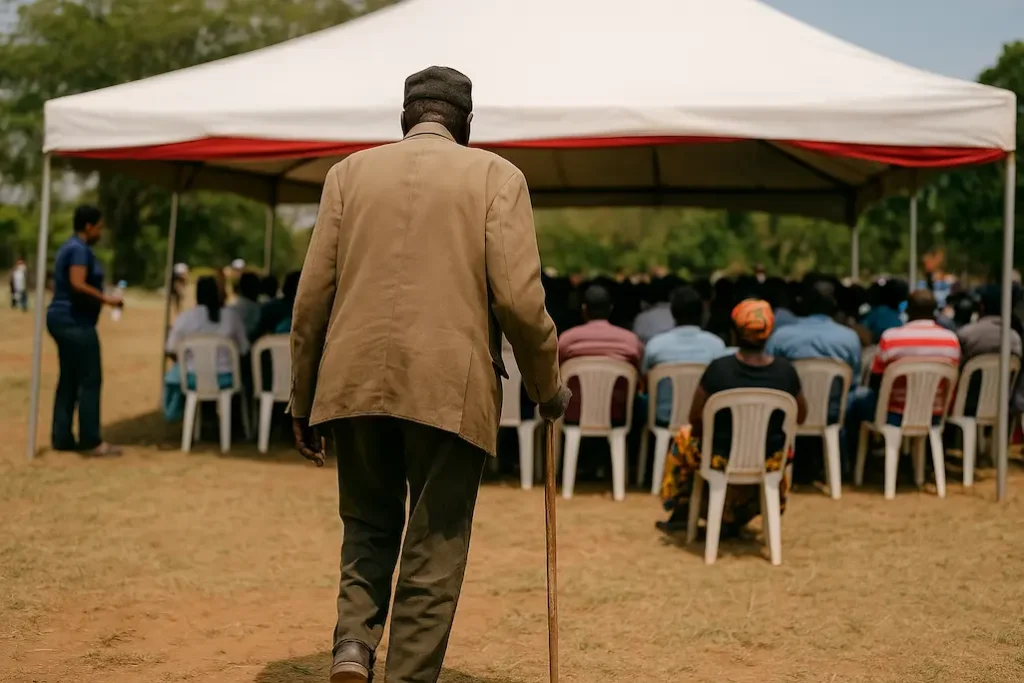
Then, an elderly man caught my eye. He walked slowly with a limp, leaning on a stick, yet determined to attend the occasion. Watching him stirred something in me. He could have stayed home, but he didn’t. He knew the meaning of the day—the weight of history and the pride of showing up for one’s country. That moment defined what ordinary Kenyan struggles mean to me: resilience, presence, and dignity even when life isn’t easy.
Why We Celebrate Mashujaa Day
Before I go further, let’s pause and remember why Kenya celebrates Mashujaa Day. The day, previously known as Kenyatta Day, honors those who fought for our independence and those who continue to build the nation in their everyday lives. You can read more about its origin and history on BBC Africa, which explains how it evolved from a remembrance of political prisoners to a celebration of all heroes—past and present.
Today, that definition includes the unsung heroes around us: parents, workers, farmers, students, and hustlers who wake up daily to keep their families and communities alive. Their courage is the heartbeat of Kenya.
The Hidden Heroes Behind Ordinary Kenyan Struggles
True heroism doesn’t always make the news. It shows up in small, consistent acts of strength—the mother selling vegetables on the roadside, the father doing two jobs to pay rent, the youth pushing a mkokoteni through traffic to earn just enough for supper.
It’s also in the woman balancing a sick patient at home while still finding food for her children. Or the hawker selling dawa ya mende from one street to another—have you ever stopped to wonder how much they take home each day? Probably very little. Yet they wake up and do it again tomorrow.
These are the people who carry Kenya on their shoulders. Their ordinary Kenyan struggles are the real stories of bravery.
Strength in Simplicity
That Mashujaa Day event ended beautifully. The organizers handed out soda and buns for the children and plates of rice and beans for adults. The gesture may have been simple, but it brought everyone together—community, laughter, and gratitude filling the air.
Watching people share food and smiles reminded me that heroism is often found in the ordinary moments we overlook. It’s in how we care for one another, how we keep hope alive, and how we show up even when it’s hard.
As I looked around, I saw mothers with babies on their laps, elders chatting under trees, and teenagers proudly waving small Kenyan flags. Everyone there represented a story of persistence—proof that ordinary Kenyan struggles are not a weakness but a source of strength.
How We Can Honor Today’s Mashujaas
So, how do we celebrate these heroes? We start by noticing them. Appreciate the people around you—the guard who opens the gate every morning, the boda rider who ensures you get home safely, the teacher shaping young minds in rural schools, or the farmer working tirelessly in unpredictable weather.
Let’s also support one another in tangible ways. Buy from small businesses. Speak kindly. Offer help without expecting a reward. Heroism doesn’t have to be grand—it can be as simple as showing up and doing your best where you are.
Learning from Ordinary Heroes
Everyday Kenyans remind us of values that books can’t teach—patience, endurance, and faith. They are the reason we still have hope as a nation.
If you’re looking for inspiration to strengthen your mindset and organize your daily life, check out these reads that celebrate persistence and discipline:
📚 Atomic Habits by James Clear
📚 The Power of Habit by Charles Duhigg
📚 The Life-Changing Magic of Tidying Up by Marie Kondo
These books blend lessons on structure, motivation, and small changes—perfect for anyone navigating their own ordinary Kenyan struggles.
Closing Reflections
As I walked home that afternoon, holding my daughter’s hand, I realized that every person I had seen that day—the band members, the officer, the old man, the lady offering water—had taught me something about resilience and hope.
Mashujaa Day isn’t just about remembering heroes from the past. It’s about recognizing the heroes we meet every day. It’s about the courage to show up, the humility to serve, and the strength to keep going when life gets hard.
So, this year, my Mashujaas are not on posters or in parades. They are in homes, markets, offices, and streets—people like you and me, who rise every morning to face life with grace.
Call to Action (CTA)
Who is your everyday hero? Share your story in the comments or tag someone who inspires you to keep going. Let’s make this Mashujaa Day a celebration of ordinary Kenyan struggles—the real heartbeat of our nation.
Leave a Reply